
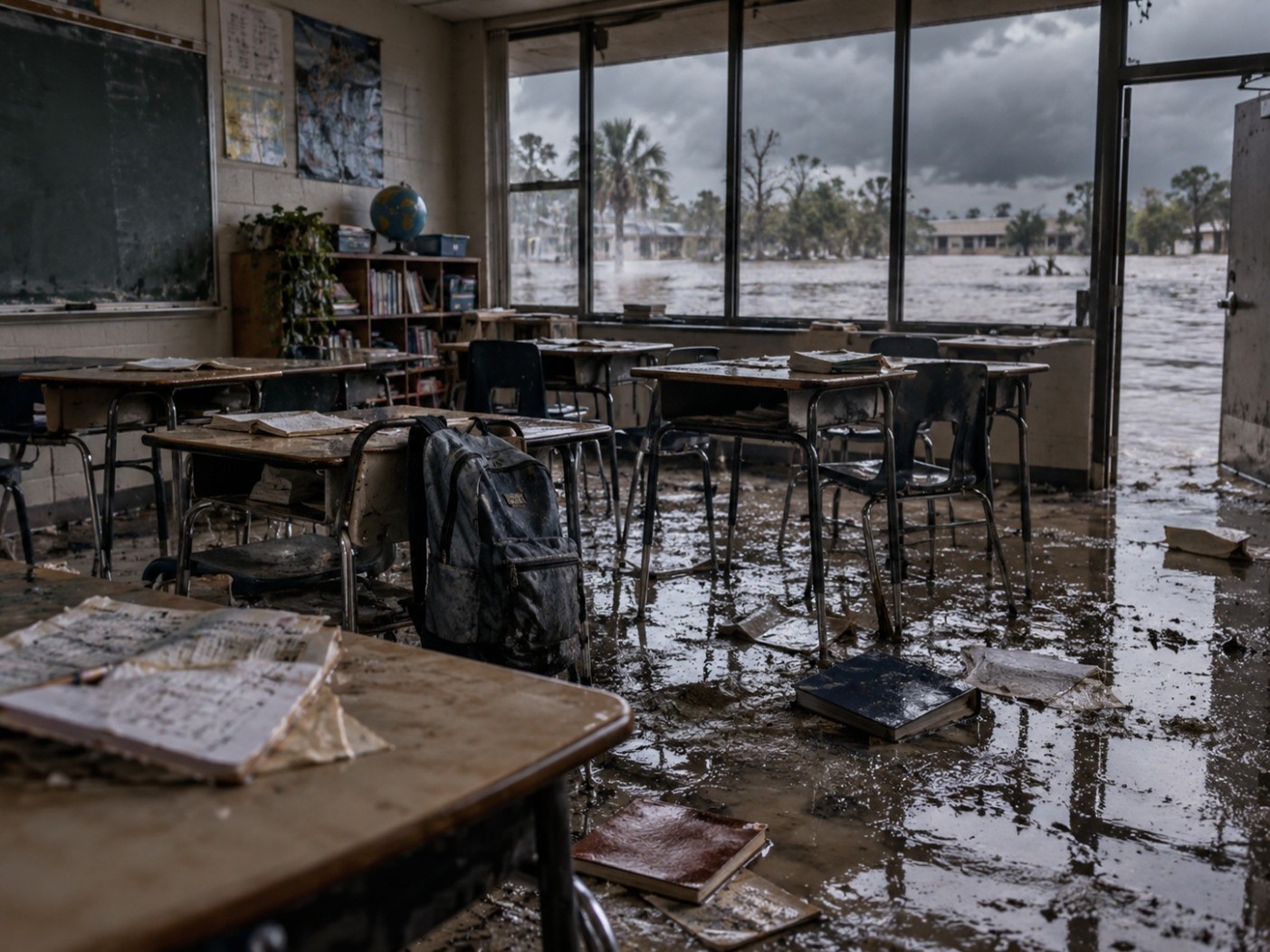
Climate change is increasingly disrupting more than infrastructure, agriculture and economies; it is directly threatening children’s education and future opportunities. In 2025, more than 171 million students, around one in every 10 schoolchildren worldwide, experienced climate-related disruption to their education, according to UNICEF (2026) Learning Interrupted report. Storms, floods, heatwaves, droughts and wildfires resulted in school closures, damaged facilities, reduced teaching hours, remote learning and declining attendance, turning education into another frontline of the climate crisis (BusinessGreen, 2026).
This is evidenced by:
- Climate disruption to education has significant long-term economic costs.
Storms alone affected 109 million students in 2025, while floods affected at least 70 million and heatwaves approximately 50 million. UNICEF estimates that educational losses resulting from these disruptions could translate into at least USD 200 billion in lost lifetime earnings, demonstrating that climate impacts on schools ultimately become development and economic risks (UNICEF, 2026). - The burden falls disproportionately on vulnerable countries and children.
Around 75% of affected students live in low- and lower-middle-income countries, where education systems often have less capacity to withstand repeated climate shocks. Girls face additional risks because displacement, reduced household income, caregiving responsibilities, water collection and child marriage can prevent them from returning to school after climate emergencies (AFD, 2026). For example, Egypt had a severe Khamsin wind and dust storm in April 2025 that caused a nationwide one-day suspension of classes affecting more than 28 million students. - Education systems themselves must become climate-resilient.
UNICEF therefore calls for climate-resilient school infrastructure, continuity-of-learning mechanisms, climate-informed education planning and stronger integration of climate education into curricula (UNICEF, 2026).
Climate resilience can therefore no longer be planned only around water, food, infrastructure and livelihoods. Protecting schools and ensuring continuity of education must become an integral part of national adaptation planning, because every climate-related day lost from school can carry social and economic consequences far beyond the immediate disaster. For Arab countries, where extreme heat, drought, floods, water scarcity and conflict-related vulnerabilities can compound educational disruption, governments should prioritize climate-resilient school infrastructure, early-warning and continuity-of-learning systems, and the integration of education into national adaptation and climate finance priorities.