
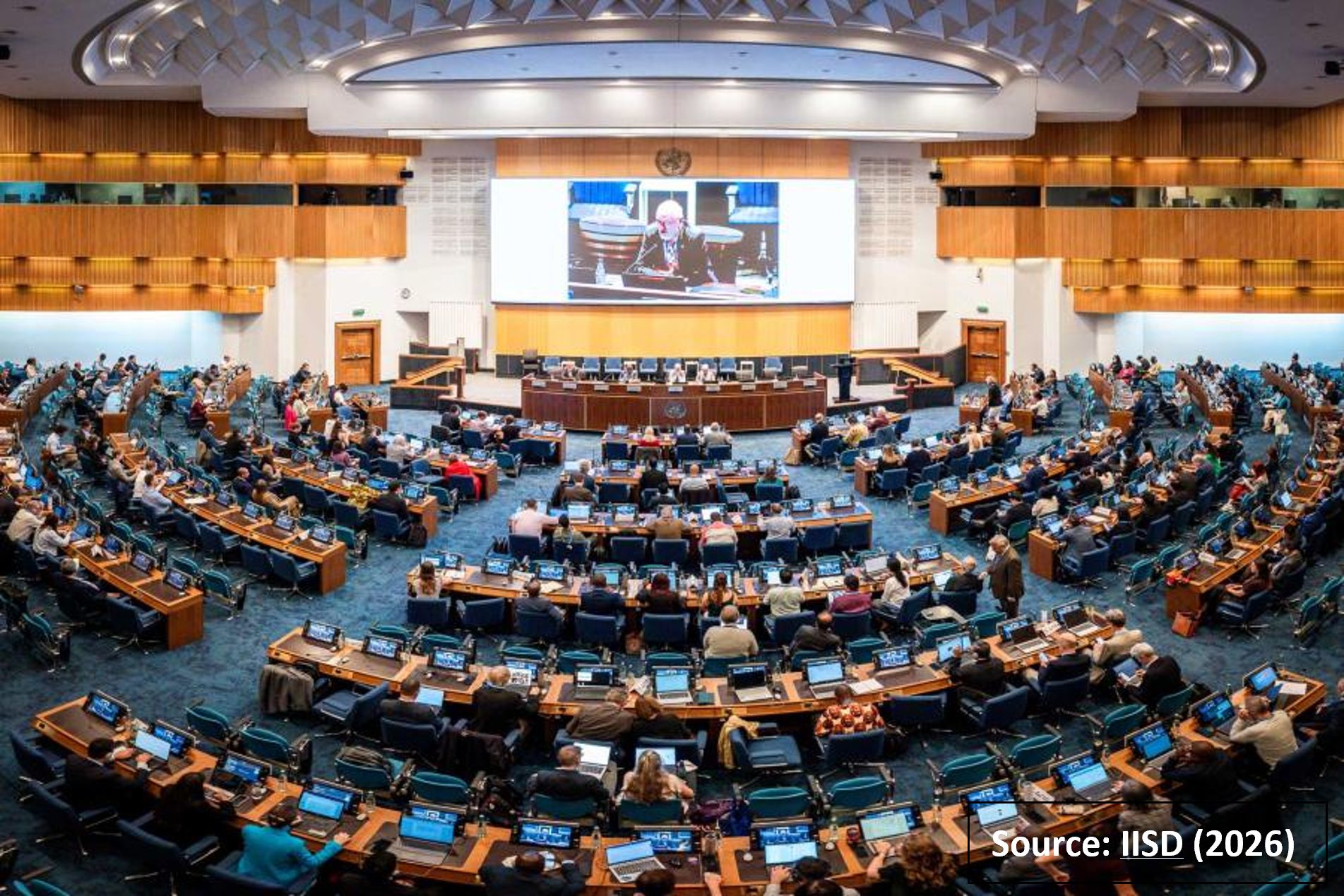
Climate change politics are increasingly spilling over into the very institutions responsible for providing independent scientific evidence. The 65th session of the Intergovernmental Panel on Climate Change (IPCC-65), held in Addis Ababa, Ethiopia, on 12–16 October 2026, exposed a troubling shift: political disagreements are no longer confined to climate negotiations but are now obstructing the production and timely delivery of climate science itself. Despite growing climate risks, governments failed to agree on the timeline and budget for the IPCC’s Seventh Assessment Report (AR7), forcing the session to be suspended without resolving either issue (IISD Earth Negotiations Bulletin, 19 October 2026). This growing politicization of climate science is evidenced by:
1. Political disagreements are delaying delivery of critical climate science. A major divide emerged over whether the three AR7 Working Group reports should be completed in 2028, in time to inform the second Global Stocktake (GST-2) under the Paris Agreement, or extended into 2029. While a broad coalition of countries, including vulnerable developing countries and small island states, supported the earlier timeline, Saudi Arabia, India, Russia and several others advocated additional time, citing scientific rigor, review requirements and inclusivity. The disagreement is particularly consequential for the mitigation report, which could arrive after major international climate decisions have already been taken (IISD, 2026).
2. Political deadlock is threatening the financial foundations of scientific work. Disagreements over the assessment timeline also blocked approval of the IPCC’s 2027 budget, as some countries opposed funding activities linked to an unagreed schedule. This political deadlock threatens scientific work, expert meetings and the participation of developing-country scientists, particularly as the IPCC faces funding shortages and possible depletion of its Trust Fund by 2028 (Climate Watch, 2026).
3. Scientific independence and equitable participation are becoming politically contested. Governments disagreed over whether IPCC reports should follow scientific timelines or align with international climate negotiations. While some warned against rushing scientific assessments, others stressed that delays would deny vulnerable countries timely evidence for climate action. Prolonged negotiations also forced many developing-country delegates to leave before decisions were reached, prompting the Chair to suspend the session to safeguard inclusive decision-making (Reuters, 2026).
The implications extend far beyond one unsuccessful meeting. IPCC-65 demonstrates how geopolitical tensions and disagreements over climate action can undermine the scientific processes intended to inform it. Although scientific assessments continue to advance, their timely delivery is increasingly vulnerable to political and institutional deadlock. The challenge is no longer simply ensuring that climate policies follow science, but ensuring that politics does not prevent science from reaching policymakers in the first place. Safeguarding the IPCC’s independence, predictable financing and equitable participation is therefore essential to maintaining credible, science-based global climate action.
For Arab countries, delays could weaken the scientific basis for climate adaptation planning, particularly in addressing water scarcity, extreme heat and food insecurity. Arab countries should therefore strengthen regional scientific cooperation, advocate for timely IPCC assessments and ensure stronger participation of Arab scientists in global climate research and decision-making.