
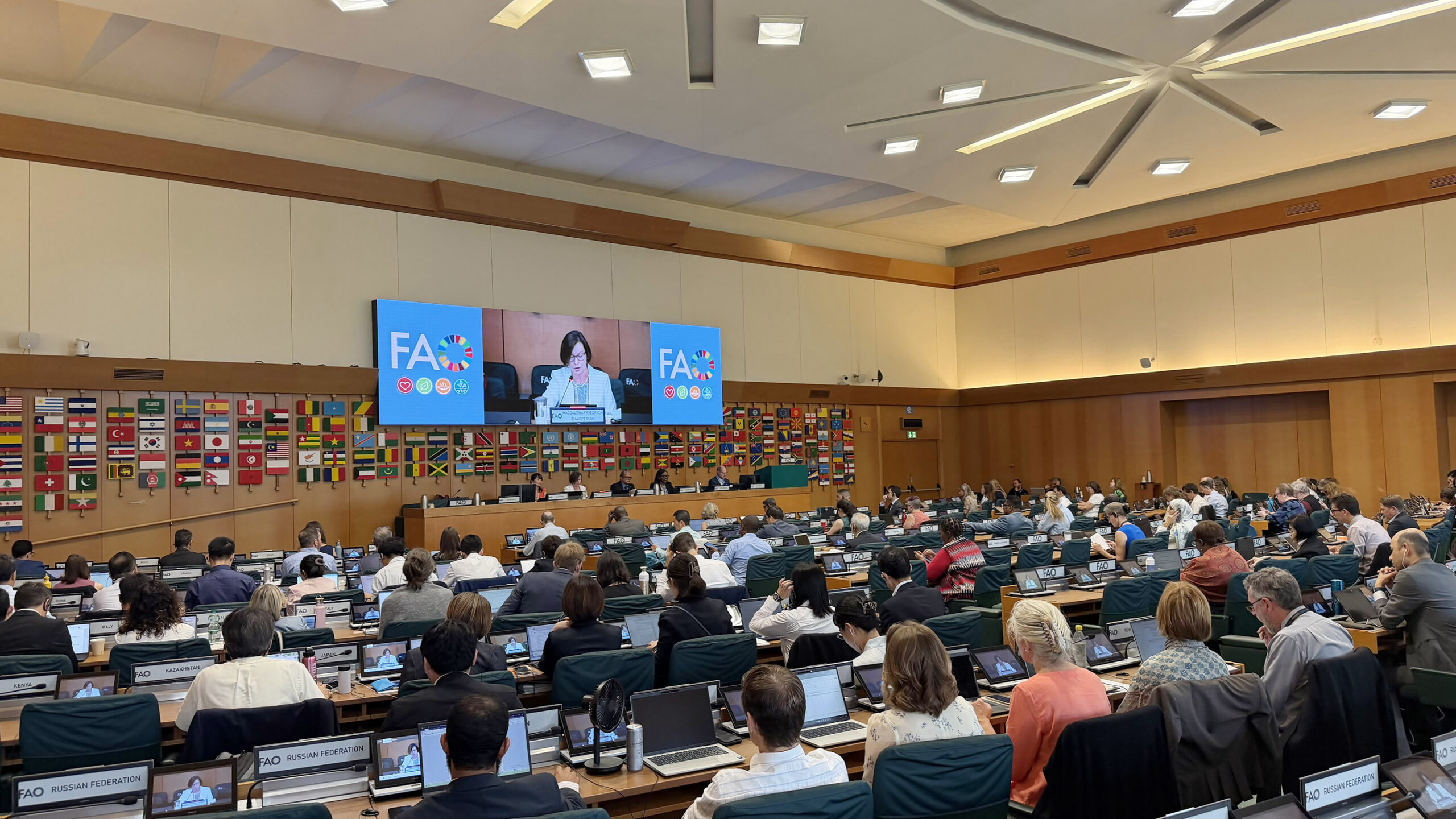
The 22nd meeting of the Stockholm Convention’s POPs Review Committee (POPRC-22), held 21–25 September 2026, was a strategic checkpoint in the global chemicals and waste regime. Rather than being defined by individual nominations, it exposed how the Committee’s ability to apply the Convention’s precautionary mandate depends on the quality, availability, and balance of scientific evidence, monitoring data, industry information, and stakeholder participation. Its work moved substances through the Convention’s staged process: Annex D screening, which asks whether a chemical is likely to be persistent, bioaccumulative, capable of long-range environmental transport and harmful to human health or the environment; Annex E risk profiling, which assesses whether long-range transport is likely to cause significant adverse effects such that global action is warranted; and Annex F risk management evaluation, which examines socioeconomic considerations and possible control measures before any recommendation to list a substance under Annex A (elimination), Annex B (restriction) or Annex C (unintentional production). POPRC-22 also advanced intersessional work on bioaccumulation guidance, global monitoring and stakeholder engagement, and evaluated the continued needs and exemptions for COP-13. The signal is clear: the Convention’s future effectiveness will depend as much on data generation, capacity-building and supply-chain transparency as on formal listing decisions.
For developing countries, the meeting highlights both structural challenges and openings. Challenges include limited laboratory, monitoring, and analytical capacity; missing standards for complex substances; difficulty obtaining reliable upstream supply-chain information; confidential business information; limited awareness of Annex F information requests, which seek socioeconomic and control-measure inputs; and the cost of managing stockpiles, wastes and transitions to alternatives. Many alternatives are not yet technically equivalent, as shown by sulfluramid insect baits and some Perfluorooctanesulfonic acid (PFOS) uses, so realistic transition periods and financial and technical assistance remain essential. Opportunities lie in early engagement: submitting data and comments before the deadline for substances entering Annex E risk profiling, which evaluates whether long-range transport leads to significant adverse effects; participating in intersessional working groups on Annex E risk profiles, bioaccumulation guidance and stakeholder engagement; using the global monitoring plan to build regional evidence; and leveraging capacity-building, technology transfer and financing under the Convention. Countries can also use the indicative lists to screen imports, avoid regrettable substitutions, and ensure that health and environmental safety information is not treated as confidential under Article 9.
Arab countries should treat POPRC-22 as a signal to strengthen regional coordination and prepare for COP-13. Bahrain, Saudi Arabia, Sudan and Morocco have POPRC members, giving the region a direct channel to shape intersessional work on bioaccumulation, Annex F information and monitoring. Priority sectors include oil and gas firefighting foams containing PFOS, metal plating, petrochemicals and plastics, construction materials, imported electrical and electronic equipment, textiles and medical devices, where DBDPE and TBPH may be present. National authorities should begin inventories of uses, imports, stockpiles and waste, engage customs and industry, and submit any relevant data before 4 December 2026. They should also plan for PFOS firefighting-foam phase-out with technical and financial support, manage legacy stockpiles, avoid recycling POP wastes above low-POP content limits, and expand regional monitoring for air, dust, human milk and food chains. By aligning positions across Arab states and using the Basel, Rotterdam and Stockholm COPs, the region can reduce compliance costs, avoid regrettable substitution, and turn scientific gaps into opportunities for capacity-building and influence.
Cover Photo by the BRS Secretariat