
Introduction
October 2026 was dominated by the UN Biodiversity Conference, the seventeenth meeting of the Conference of the Parties to the Convention on Biological Diversity (CBD COP17), held in Yerevan, Armenia. The conference carried out the first global review of progress under the Kunming-Montreal Global Biodiversity Framework (KMGBF) and adopted a package of decisions branded the “Yerevan Pathway” to guide action until 2030. Several Arab countries used the summit to present national progress and to press for more accessible finance, technology transfer and capacity building.
Alongside the negotiations, the month brought concrete steps across the region: a new nature reserve in Jordan, IUCN Green List recognition for protected areas in Egypt and Saudi Arabia, new guidance and feeding stations for threatened vultures and a solar park turned gazelle breeding site in Saudi Arabia, the release of rehabilitated sea turtles and a first environmental DNA survey of coastal vertebrates in the UAE, seasonal rangeland protection in Abu Dhabi, renewed scientific oversight of a long-standing Egyptian protected area, and continued regional work under the Barcelona Convention in the Mediterranean. This report summarises these developments for awareness and learning, with sources given for each item.
Special Focus: The UN Biodiversity Conference (CBD COP17)
A Conference Built Around the First Global Review
COP17 ran from 19 to 30 October 2026 in Yerevan, preceded by a Leaders for Nature Summit on 16 October, which concluded with the Yerevan Declaration – Taking Action for Nature, and followed by a ministerial High-Level Segment on 27–28 October [1]. Negotiations were extended by a day, and the closing plenary concluded on Saturday, 31 October after an all-night session [2].
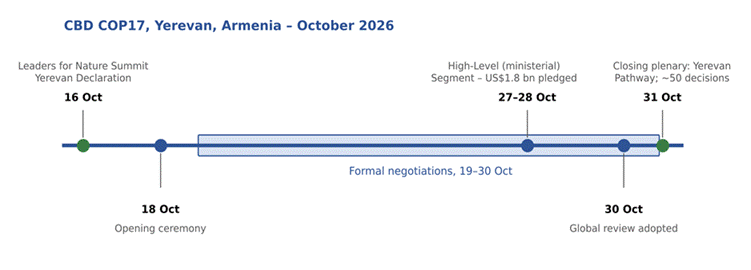
Figure 1. Key milestones of CBD COP17 (prepared from CBD and media sources cited in this section).
The central task was the first global review of collective progress under the KMGBF. The final global report, published in September, found that the world is off track on 22 of the 23 global targets for 2030; only 45% of countries had published updated national biodiversity strategies and action plans (NBSAPs) on time, while 83% had submitted at least one national target [3]. The adopted review text notes with deep concern that the 2030 targets will not be met without rapid acceleration and warns that the 2050 goals may also be at risk [4].
Main Outcomes
Overall, the conference adopted nearly 50 decisions, including the Yerevan Pathway, which sets priorities for action through 2030 [5]. Key elements include:
- Yerevan Pathway. Countries are called on to revise their national biodiversity plans, subject to available funding, with particular attention to closing the gap in the coverage of marine, coastal and inland water ecosystems [6]. The Pathway also calls for aligning national budgets and economic decisions with the KMGBF and for stronger monitoring and reporting; the language on reforming harmful subsidies was softened during negotiations from “urges” to “encourages” [7].
- Finance. Countries reaffirmed the goal of mobilising at least US$200 billion per year from all sources by 2030, after developed countries missed the earlier milestone of US$20 billion per year in international finance by 2025 [8]. Criteria for a future financial mechanism under the COP were agreed, but whether it will be a new fund or build on existing arrangements was deferred to COP18 in 2028 [9]. The High-Level Segment closed with US$1.8 billion in new pledges [10].
- Digital sequence information (Cali Fund). The indicative contribution rates for companies (1% of profits or 0.1% of revenue) were reaffirmed, yet by the end of the conference total pledges to the fund stood at only US$10,565, with no large DSI-reliant company having contributed [11].
- Indigenous peoples and local communities. Parties agreed the operating rules (modus operandi) for the new permanent subsidiary body on Article 8(j) [12].
- Monitoring. An ad hoc technical expert group was established to support operationalisation of the monitoring framework and preparation of the eighth national reports [13].
- Marine biodiversity. Parties adopted compromise voluntary guidance on peer review for ecologically or biologically significant marine areas (EBSAs) and agreed to establish an informal advisory group on CBD work related to areas beyond national jurisdiction, while the decision only “takes note” of the entry into force of the BBNJ (High Seas) Agreement [14]. The marine decision also addresses the management of marine and coastal protected areas and other effective area-based conservation measures (OECMs) in support of Target 3 [15].
- Other decisions covered protected areas and forest biodiversity, sustainable wildlife management, invasive alien species, synthetic biology and risk assessment of living modified organisms [16]. Negotiations on cooperation and strategic review, and two items under the Nagoya Protocol, were left unfinished and deferred [17].
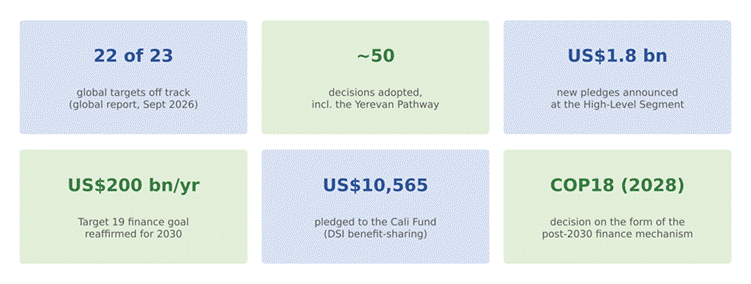
Figure 2. COP17 at a glance – selected figures from the conference outcomes.
The Armenian Presidency also launched four initiatives addressing technology for biodiversity monitoring, harmful incentives, mountain and freshwater ecosystems, and OECMs, while ministerial dialogues focused on cooperation between finance and environment ministries and on sustainable oceans [18]. One of these, the Yerevan Global OECM Action Hub, was launched on 28 October by the COP17 Presidency with the CBD Secretariat, FAO and IUCN to help countries identify, assess, recognise and report OECMs, building on agreed CBD criteria, in support of Target 3 [19]. Reactions were mixed: conservation groups and some delegations welcomed progress but stressed that finance remains the main unresolved issue [20].
Arab Voices at COP17
Arab participation was visible at the Leaders’ Summit and the High-Level Segment. National statements shared common messages: biodiversity is linked to food and water security and to sustainable development, finance must be adequate, accessible and predictable, and arid countries need targeted technology transfer and capacity building. Table 1 summarises selected statements.
| Country | Key messages and figures presented |
| Egypt | Statement delivered by the Minister of Local Development and Environment on behalf of the President at the Leaders’ Summit. Egypt highlighted its COP14 Presidency (Sharm El-Sheikh, 2018), the update of its NBSAP, the preparation of a national biodiversity finance plan, and the declaration of its 31st protected area. It stressed that the challenge is turning commitments into funded national action, without additional financial burdens on developing countries [21]. Egypt’s protected areas cover more than 17% of the national territory [22]. |
| Saudi Arabia | Delegation led by the CEO of the National Center for Wildlife. A national biodiversity framework with 22 targets aligned with the KMGBF; protected areas cover 18.3% of land and 16.2% of marine areas, against a 30% target for 2030; more than 1 million hectares of degraded land rehabilitated and over 10,000 animals released into the wild [23]. |
| Algeria | Presidential message read at the Leaders’ Summit: more than 27,000 recorded species (about 8,500 plants and 18,000 animals), a network of 24 protected areas, an updated NBSAP (2025–2030) with 24 national targets and 93 measures, the restoration of the “Green Dam” across 4.7 million hectares, activation of the National Seed Bank and launch of a National Environmental Museum of Biodiversity [24]. |
| Qatar | Minister of Environment and Climate Change at the High-Level Segment: terrestrial reserves cover about 27% of land; 2030 targets include protecting 30% of terrestrial and marine areas and restoring 30% of natural habitats; programmes on whale sharks and dugongs; calls for technology and capacity support for countries with arid climates [25]. |
Table 1. Selected Arab statements at COP17 (Leaders’ Summit, 16 October, and High-Level Segment, 27–28 October).
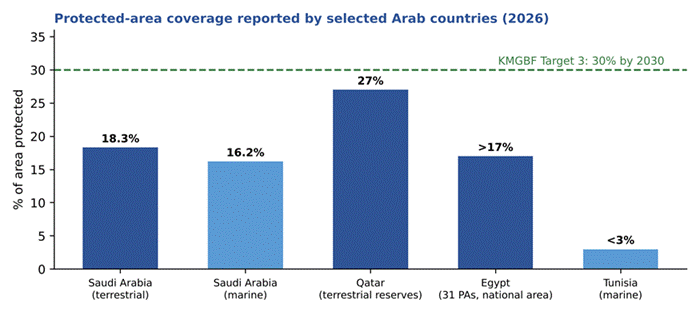
Figure 3. Protected-area coverage reported by selected Arab countries (sources: Saudi and Qatari COP17 statements; Youm7 for Egypt; IUCN for Tunisia).
| Why does COP17 matter for the Arab region? The Yerevan Pathway explicitly targets the under-representation of marine, coastal and inland water ecosystems in national plans – directly relevant to the Red Sea, Gulf and Mediterranean coasts and to scarce freshwater habitats in the region.Most Arab countries are still below the 30% protection target, particularly at sea (Figure 3); in Tunisia, for example, marine protected areas cover less than 3% of national waters [26]. The next revision of NBSAPs will be a key opportunity to expand marine protected areas and OECMs.Saudi Arabia and Qatar were among the emerging economies discussed as potential new contributors to biodiversity finance, and Saudi Arabia submitted options on how the contributor base could be expanded [27]. The debate on who pays will continue until COP18.For developing Arab countries, the deferral of the finance-mechanism decision means that national biodiversity finance plans and blended finance will remain essential in the short term. |
Protected Areas
IUCN Green List Recognition for Wadi Al-Hitan and the Farasan Islands
On 23 October, an IUCN Green List awards ceremony held during COP17 in Yerevan celebrated 25 protected and conserved areas worldwide, two of them in the Arab region [28]. Saudi Arabia’s Farasan Islands Reserve, managed by the National Center for Wildlife, joined the Green List for the first time in March 2026 [29]. Egypt’s Wadi Al-Hitan (Valley of the Whales) in Fayoum, a World Heritage Site first Green Listed in 2018 [30], had its listing renewed until 2031 [31].
The IUCN Green List of Protected and Conserved Areas is the global standard for sites that are effectively and equitably governed and managed, assessed on governance, planning, management and conservation outcomes. It also serves as a complementary indicator for Target 3 of the KMGBF [32].
Jordan Declares the Baptism Site (Al-Maghtas) a Nature Reserve
On 20 October, Jordan’s Council of Ministers approved declaring the Al-Maghtas site (Bethany Beyond the Jordan) a nature reserve covering 10 km², including Wadi Al-Kharrar, Wadi Gharraba and areas linked to the Jordan River. The site, already on the UNESCO World Heritage List, combines riverine and wetland habitats with wadis and plains that provide food, shelter, breeding and resting areas for many species [33].
The decision is expected to support long-term scientific research and monitoring, the creation of a biodiversity database and sustainable eco-, cultural and religious tourism, and it will add the site to the national protected-area network [34]. It is a clear example of linking natural and cultural heritage protection in a single site.
Egypt Strengthens Scientific Oversight of the Omayed Protected Area
In Egypt, discussions in October on forming a scientific committee for the Omayed Protected Area (Matrouh), including experts from outside the Ministry and representatives of the protected-areas sector, drew attention to this 1986 reserve on the north-western coast. Coverage highlighted the African houbara reintroduction programme, which has gone beyond releasing birds to include DNA analyses and comparisons with reference genetic samples, and noted that long-term monitoring data on survival and breeding rates will be needed to judge success [35].
Why does this matter?
All three cases show a shift from designating protected areas to managing them on the basis of evidence: baseline data, monitoring and independent scientific advice are what turn a protected area on paper into effective conservation, which is also a core theme of the COP17 monitoring decisions. The Green List recognition of Wadi Al-Hitan and the Farasan Islands shows that Arab protected areas can meet the global benchmark for effective management.
Wildlife and Threatened Species
Saudi Arabia Plans Three “Vulture Restaurants”
On 23 October, it was reported that Saudi Arabia’s National Center for Wildlife (NCW) plans to establish three supplementary feeding stations for vultures (“vulture restaurants”) this year. The initiative follows a best-practice guide on supplementary feeding in arid lands developed by NCW with international specialists and published in Arabic and English in August 2026 [36]. The guide was prepared under the CMS Raptors MOU and will be presented as an information document at the Fourth Meeting of Signatories [37].
The guide covers five vulture species found in Saudi Arabia, including the threatened Lappet-faced and Egyptian vultures. It recommends siting stations close to breeding cliffs and away from roads and airports, and excluding carcasses from unknown origins, suspected poisoning, infectious disease or roadkill [38]. Poisoning and contaminated food are among the main threats to vultures, so safe feeding sites address a direct cause of mortality.
A Solar Park Becomes a Breeding Site for Threatened Sand Gazelles
In early October, the Prince Mohammed bin Salman Royal Reserve in Saudi Arabia announced that 38 Vulnerable sand gazelles (33 females and five males) had been introduced into an operational 250-megawatt solar park, an initiative it calls ReWildingVoltaics and describes as a global first [39]. The 505-hectare park, built and managed by Amaala Sustainable Company for Energy, supplies renewable electricity to Red Sea Global’s AMAALA destination. The herd is expected to grow to about 600 animals by 2031, providing gazelles for reintroduction into the reserve [40].
The project shows how large renewable energy sites in arid lands can be planned to support wildlife rather than displace it, an opportunity that environmental assessments of solar and wind projects in the region should consider from the design stage.
Sea Turtles Returned to the Gulf and the Gulf of Oman
On 15 October, 43 rehabilitated sea turtles were released at Saadiyat Beach, Abu Dhabi: 15 critically endangered hawksbills (including 10 hatchlings) and 28 endangered green turtles, marking six years of rescue and rehabilitation work by the Environment Agency – Abu Dhabi and The National Aquarium [41]. In Sharjah, the Environment and Protected Areas Authority concluded its “Nature Conservation Journey” campaign in Kalba by releasing 15 rehabilitated hawksbill turtles, accompanied by exhibitions on the emirate’s marine stranding response programme [42]. In Oman, teams in South Al Sharqiyah reported rescuing 201 adult turtles that had strayed from their natural habitat during September [43].
Environmental DNA Reveals Vertebrate Diversity on Abu Dhabi’s Urban Coast
On 12 October, Sorbonne University Abu Dhabi, the Environment Agency – Abu Dhabi and France’s Muséum national d’Histoire naturelle announced the first environmental DNA (eDNA) survey of marine vertebrates in Abu Dhabi, published in PLoS ONE. Seawater samples from four urban coastal sites revealed 83 vertebrate taxa, including 75 bony fish, two sharks and rays, one marine mammal and five birds. Mangrove and seagrass sites supported more diverse fish lineages than recently developed sites, although the authors caution that, without a pristine reference site, this is only a preliminary signal [44].
The study is the first campaign of MARVEL, a multi-year eDNA monitoring programme for UAE coastal waters [45]. Because eDNA detects species from traces in the water without capturing or disturbing animals, it offers a cost-effective complement to conventional surveys for monitoring coastal habitats under heavy development pressure.
Combating Illegal Hunting
Oman’s Environment Authority, in coordination with the Royal Oman Police, announced on 5 October the arrest of three people for illegally hunting three Arabian gazelles in Dhofar, urging the public to report activities that threaten protected species [46]. Enforcement cases of this kind are important deterrents, especially as the hunting and falconry seasons open across the Gulf in the autumn.
Rangelands and Migratory Species
Abu Dhabi’s Seasonal Grazing Ban Protects Desert Rangelands
The Environment Agency – Abu Dhabi announced the end of the 2026 camel grazing season, with the annual grazing ban in force across the emirate from 16 October 2026 to 14 May 2027. The ban allows natural rangelands to recover and native plants to regenerate, protecting biodiversity and desert ecosystems [47]. Seasonal rest is a simple, low-cost tool for restoring arid rangelands that could be replicated more widely in the region.
World Migratory Bird Day: “Every Bird Counts”
The autumn edition of World Migratory Bird Day was observed on 10 October 2026 [48]. In Qatar, the Ministry of Environment and Climate Change encouraged the public and birdwatchers to record migratory species to enrich the national biodiversity database, noting that autumn migration peaks in September and October, and reminded hunters of the rules for the 2026–2027 hunting season [49]. The Arab region lies on major flyways, including the Rift Valley/Red Sea flyway, which makes citizen-science records and regulated hunting particularly valuable.
Mediterranean Sea: Regional Cooperation
Barcelona Convention Meetings on Sustainable Development and Transboundary Impact Assessment
The UNEP/MAP–Barcelona Convention calendar for October included the 27th Meeting of the Steering Committee of the Mediterranean Commission on Sustainable Development (Athens, 13–14 October) and an online regional consultation meeting, organised by PAP/RAC on 27 October, on guidelines for Environmental Impact Assessment (EIA) and Strategic Environmental Assessment (SEA) in a transboundary context [50].
Transboundary EIA/SEA guidance is particularly relevant for southern and eastern Mediterranean countries, where coastal infrastructure, energy and port projects may have impacts that cross national borders and affect shared marine habitats and migratory species. Further meetings are scheduled for November, including the 99th Meeting of the Bureau and a meeting of the ad hoc group of experts on Mediterranean MPAs [51].
Key Lessons for the Region
- From commitments to delivery. The common thread of Arab statements at COP17 was the need to turn pledges into funded, measurable national action – a message that applies equally to protected-area management on the ground.
- The marine gap. Marine protection in most Arab countries lags behind terrestrial protection; the Yerevan Pathway’s emphasis on marine, coastal and inland water ecosystems should guide the next round of NBSAP revisions.
- Evidence-based management. Reintroduction programmes, turtle rehabilitation, vulture feeding stations and new eDNA surveys all depend on long-term monitoring to demonstrate results and adapt management, while the IUCN Green List offers a recognised benchmark for showing that management is effective.
- Infrastructure that works for nature. Saudi Arabia’s ReWildingVoltaics project shows that renewable energy sites can be designed to support threatened species, if biodiversity is considered from the planning stage.
- Heritage and nature together. Jordan’s Al-Maghtas reserve shows how combining cultural and natural values can strengthen the case for protection and create local economic opportunities.
- Shared ecosystems need shared tools. Regional instruments such as transboundary EIA/SEA guidance and flyway-scale bird monitoring remain essential for species and habitats that cross borders.
Looking Ahead
Follow-up events include an online expert analysis of COP17 outcomes hosted by the Stockholm Environment Institute on 5 November 2026 [52], the Fourth Meeting of Signatories to the CMS Raptors MOU (30 November – 2 December 2026), where the Saudi vulture guide will be presented [53], and the November meetings of the Barcelona Convention system [54]. At the national level, the main task in the coming months will be revising NBSAPs and preparing finance plans in line with the Yerevan Pathway, ahead of the eighth national reports and COP18 in 2028.
References
Akhbar El-Yom. Wadi Al-Hitan on the Green List (in Arabic). 2026. https://akhbarelyom.com/news/newdetails/4817281/1/-%D9%88%D8%A7%D8%AF%D9%89-%D8%A7%D9%84%D8%AD%D9%8A%D8%AA%D8%A7%D9%86-%D8%B9%D9%84%D9%89-%D8%A7%D9%84%D9%82%D8%A7%D8%A6%D9%85%D8%A9-%D8%A7%D9%84%D8%AE%D8%B6%D8%B1%D8%A7%D8%A1
Al Khaleej. Sharjah Environment Authority concludes ‘Nature Conservation Journey’ by releasing sea turtles (in Arabic). 21 October 2026. https://www.alkhaleej.ae/2026-10-21/%D9%85%D9%86%D9%88%D8%B9%D8%A7%D8%AA/%D9%85%D8%AD%D8%B7%D8%A7%D8%AA/%D8%A8%D9%8A%D8%A6%D8%A9-%D8%A7%D9%84%D8%B4%D8%A7%D8%B1%D9%82%D8%A9-%D8%AA%D8%AE%D8%AA%D8%AA%D9%85-%D8%B5%D9%88%D9%86-%D8%A7%D9%84%D8%B7%D8%A8%D9%8A%D8%B9%D8%A9-%D8%A8%D8%A5%D8%B7%D9%84%D8%A7%D9%82-%D8%B3%D9%84%D8%A7%D8%AD%D9%81-%D8%A8%D8%AD%D8%B1%D9%8A%D8%A9
Al Raya. Minister of Environment participates in the Biodiversity Conference COP17 (in Arabic). 28 October 2026. https://www.raya.com/2026/10/28/%D9%88%D8%B2%D9%8A%D8%B1-%D8%A7%D9%84%D8%A8%D9%8A%D8%A6%D8%A9-%D9%8A%D8%B4%D8%A7%D8%B1%D9%83-%D9%81%D9%8A-%D9%85%D8%A4%D8%AA%D9%85%D8%B1-%D8%A7%D9%84%D8%AA%D9%86%D9%88%D8%B9-%D8%A7%D9%84%D8%A8%D9%8A%D9%88%D9%84%D9%88%D8%AC%D9%8A-cop17
Al-Ahram Gate. Omayed Protected Area in Matrouh: will the new scientific committee lead a different phase for biodiversity protection? (in Arabic). 19 October 2026. https://gate.ahram.org.eg/News/5967798.aspx
Amwal Al Ghad. Minister of Environment calls for stronger international finance and faster implementation of biodiversity targets (in Arabic). 16 October 2026. https://amwalalghad.com/2026/10/16/%D9%88%D8%B2%D9%8A%D8%B1%D8%A9-%D8%A7%D9%84%D8%A8%D9%8A%D8%A6%D8%A9-%D8%AA%D8%AF%D8%B9%D9%88-%D8%A5%D9%84%D9%89-%D8%AA%D8%B9%D8%B2%D9%8A%D8%B2-%D8%A7%D9%84%D8%AA%D9%85%D9%88%D9%8A%D9%84-%D8%A7%D9%84/
Arab News. Saudi Arabia plans three ‘vulture restaurants’ to protect threatened species. 23 October 2026. https://www.arabnews.com/green-blue/saudi-arabia-plans-three-vulture-restaurants-to-protect-threatened-species-3007028
Arab News. Saudi Arabia urges action on global biodiversity pledges at COP17 summit. 27 October 2026. https://www.arabnews.com/green-blue/saudi-arabia-urges-action-on-global-biodiversity-pledges-at-cop17-summit-3008342
Arab News. Saudi solar park becomes breeding ground for threatened gazelles. October 2026. https://www.arabnews.pk/saudi-arabia/saudi-solar-park-becomes-breeding-ground-for-threatened-gazelles-3003253
Awras. Algeria records more than 27,000 living species and expands its protected areas (in Arabic). 16 October 2026. https://awras.com/%D8%A7%D9%84%D8%AC%D8%B2%D8%A7%D8%A6%D8%B1-%D8%AA%D8%AD%D8%B5%D9%8A-%D8%A3%D9%83%D8%AB%D8%B1-%D9%85%D9%86-27-%D8%A3%D9%84%D9%81-%D9%86%D9%88%D8%B9-%D8%AD%D9%8A-%D9%88%D8%AA%D9%88%D8%B3%D8%B9-%D9%85
Carbon Brief. COP17: Key outcomes agreed at the UN biodiversity conference in Yerevan. 31 October 2026. https://www.carbonbrief.org/cop17-key-outcomes-agreed-at-the-un-biodiversity-conference-in-yerevan
CBD. Draft decision CBD/COP/17/WG.II/CRP.4 – Marine and coastal biodiversity and island biodiversity. 25 October 2026. https://www.cbd.int/doc/c/190e/6e3d/273509cac762392495e789e7/cop-17-wg2-crp-04-en.pdf
CEDARE. IUCN Green List celebrates 25 protected and conserved areas worldwide, including Egypt’s Wadi Al-Hitan and Saudi Arabia’s Farasan Islands, at COP17. October 2026. https://cedare.org/iucn-green-list-celebrates-25-protected-and-conserved-areas-worldwide-including-egypts-wadi-al-hitan-and-saudi-arabias-farasan-islands-at-cop17/
China Economic Net / Xinhua. Yerevan Pathway charts course for biodiversity action, but challenges remain. 1 November 2026. http://en.ce.cn/main/latest/202611/t20261102_3279739.shtml
Climate Home News. COP17 delivers fragile deal to boost conservation and funding for nature. 31 October 2026. https://www.climatechangenews.com/2026/10/31/cop17-delivers-fragile-deal-scaling-up-biodiversity-conservation-armenia-cbd/
CMS Raptors MOU. Vulture Restaurants – Best Practices for Establishment and Management of Supplementary Feeding for Vultures in Aridlands (UNEP/CMS/RAPTORS/MOS4/Inf.2). 2026. https://raptors.cms.int/document/vulture-restaurant-best-practices-establishment-and-management-supplementary-feeding
Convention on Biological Diversity (CBD). 2026 UN Biodiversity Conference – UN Biodiversity Conference charts Yerevan Pathway to accelerate global action for nature. October 2026. https://www.cbd.int/conferences/2026/
Emirates News Agency (WAM). Sorbonne Abu Dhabi eDNA study finds 83 vertebrate taxa along urban coast. 12 October 2026. https://www.wam.ae/en/article/c2pf8hw-sorbonne-abu-dhabi-edna-study-finds-vertebrate
Geneva Environment Network. World Migratory Bird Day 2026 (10 October 2026). https://www.genevaenvironmentnetwork.org/events/world-migratory-bird-day-2026-2/
Gulf News. 43 rehabilitated sea turtles return to the sea in Abu Dhabi. October 2026. https://gulfnews.com/lifestyle/43-rehabilitated-sea-turtles-return-to-the-sea-in-abu-dhabi-1.500716959
Hala News. Council of Ministers approves declaring the Maghtas site a nature reserve of 10 km² (in Arabic). 20 October 2026. https://www.hala.jo/2026/10/%D9%85%D8%AC%D9%84%D8%B3-%D8%A7%D9%84%D9%88%D8%B2%D8%B1%D8%A7%D8%A1-%D9%8A%D9%88%D8%A7%D9%81%D9%82-%D8%B9%D9%84%D9%89-%D8%A5%D8%B9%D9%84%D8%A7%D9%86-%D9%85%D9%88%D9%82%D8%B9-%D8%A7%D9%84%D9%85%D8%BA/
IUCN. A blue start to the year: a new Marine Protected Area joins the IUCN Green List while another one renews its status. 13 March 2026. https://iucn.org/news/202604/blue-start-year-new-marine-protected-area-joins-iucn-green-list-while-another-one
IUCN. Tunisia Towards 30×30 project – Strengthening marine protection towards the 30×30 target in Tunisia. 2026. https://iucn.org/node/45751
IUCN. Yerevan Global OECM Action Hub to help conserve 30% of the planet by 2030. 28 October 2026. https://iucn.org/node/47968
IUCN Green List. Wadi Al-Hitan site profile. https://iucngreenlist.org/sites/wadi-al-hitan/
Khaleej Times. Abu Dhabi camel grazing ban season begins 16 October 2026. 15 October 2026. https://www.khaleejtimes.com/uae/abu-dhabi-camel-grazing-ban-season-october-16-2026
Muscat Daily. Three held for illegal hunting of Arabian gazelles. 5 October 2026. https://www.muscatdaily.com/2026/10/05/three-held-for-illegal-hunting-of-arabian-gazelles/
Oman Observer. Marine protection initiatives in South Al Sharqiyah Governorate. 16 October 2026. https://www.omanobserver.om/article/1197862/oman/environment/marine-protection-initiatives-in-south-al-sharqiyah-governorate
Qatar Tribune. Environment ministry highlights importance of protecting migratory birds, preserving biodiversity. October 2026. https://www.qatar-tribune.com/article/258416/latest-news/environment-ministry-highlights-importance-of-protecting-migratory-birds-preserving-biodiversity/amp
Stockholm Environment Institute (SEI). COP17 post-match analysis: what next for biodiversity action? 5 November 2026. https://www.sei.org/events/cop17-post-match-analysis-biodiversity-action/
The News Minute. CBD COP17: Yerevan Pathway adopted as world falls behind on biodiversity targets. November 2026. https://www.thenewsminute.com/news/cop17-adopts-yerevan-pathway-as-countries-struggle-to-meet-global-biodiversity-targets
United Nations Environment Programme / Mediterranean Action Plan (UNEP/MAP). Main MAP–Barcelona Convention governance bodies’ and governance meetings 2026–2027. https://www.unep.org/unepmap/node/7631
Universal Owners. COP17 ends in Yerevan with nearly 50 decisions and close to US$2bn of nature pledges. November 2026. https://www.universalassetowners.com/newsroom/cop17-yerevan-nature-risk-investors/
Youm7. Developing natural protected areas: how the state is redrawing the map of environmental investment (in Arabic). 8 August 2026. https://www.youm7.com/story/2026/8/8/%D8%AA%D8%B7%D9%88%D9%8A%D8%B1-%D8%A7%D9%84%D9%85%D8%AD%D9%85%D9%8A%D8%A7%D8%AA-%D8%A7%D9%84%D8%B7%D8%A8%D9%8A%D8%B9%D9%8A%D8%A9-%D9%83%D9%8A%D9%81-%D8%AA%D8%B9%D9%8A%D8%AF-%D8%A7%D9%84%D8%AF%D9%88%D9%84%D8%A9-%D8%B1%D8%B3%D9%85-%D8%AE%D8%B1%D9%8A%D8%B7%D8%A9-%D8%A7%D9%84%D8%A7%D8%B3%D8%AA%D8%AB%D9%85%D8%A7%D8%B1-%D8%A7%D9%84%D8%A8%D9%8A%D8%A6%D9%8A/7505789
Zawya. Saudi solar park becomes a breeding ground for threatened wildlife in global first (press release). October 2026. https://www.zawya.com/en/press-release/companies-news/saudi-solar-park-becomes-a-breeding-ground-for-threatened-wildlife-in-global-first-1532107
[1]https://www.cbd.int/conferences/2026/
[2]https://www.universalassetowners.com/newsroom/cop17-yerevan-nature-risk-investors/
[3]https://www.carbonbrief.org/cop17-key-outcomes-agreed-at-the-un-biodiversity-conference-in-yerevan
[4]https://www.carbonbrief.org/cop17-key-outcomes-agreed-at-the-un-biodiversity-conference-in-yerevan
[5]https://www.universalassetowners.com/newsroom/cop17-yerevan-nature-risk-investors/
[6]https://www.climatechangenews.com/2026/10/31/cop17-delivers-fragile-deal-scaling-up-biodiversity-conservation-armenia-cbd/
[7]https://www.carbonbrief.org/cop17-key-outcomes-agreed-at-the-un-biodiversity-conference-in-yerevan
[8]https://www.carbonbrief.org/cop17-key-outcomes-agreed-at-the-un-biodiversity-conference-in-yerevan
[9]https://www.carbonbrief.org/cop17-key-outcomes-agreed-at-the-un-biodiversity-conference-in-yerevan
[10]https://www.cbd.int/conferences/2026/
[11]https://www.carbonbrief.org/cop17-key-outcomes-agreed-at-the-un-biodiversity-conference-in-yerevan
[12]https://www.thenewsminute.com/news/cop17-adopts-yerevan-pathway-as-countries-struggle-to-meet-global-biodiversity-targets
[13]https://www.carbonbrief.org/cop17-key-outcomes-agreed-at-the-un-biodiversity-conference-in-yerevan
[14]https://www.carbonbrief.org/cop17-key-outcomes-agreed-at-the-un-biodiversity-conference-in-yerevan
[15]https://www.cbd.int/doc/c/190e/6e3d/273509cac762392495e789e7/cop-17-wg2-crp-04-en.pdf
[16]https://www.thenewsminute.com/news/cop17-adopts-yerevan-pathway-as-countries-struggle-to-meet-global-biodiversity-targets
[17]http://en.ce.cn/main/latest/202611/t20261102_3279739.shtml
[18]https://www.cbd.int/conferences/2026/
[19]https://iucn.org/node/47968
[20]https://www.climatechangenews.com/2026/10/31/cop17-delivers-fragile-deal-scaling-up-biodiversity-conservation-armenia-cbd/
[21]https://amwalalghad.com/2026/10/16/%D9%88%D8%B2%D9%8A%D8%B1%D8%A9-%D8%A7%D9%84%D8%A8%D9%8A%D8%A6%D8%A9-%D8%AA%D8%AF%D8%B9%D9%88-%D8%A5%D9%84%D9%89-%D8%AA%D8%B9%D8%B2%D9%8A%D8%B2-%D8%A7%D9%84%D8%AA%D9%85%D9%88%D9%8A%D9%84-%D8%A7%D9%84/
[22]https://www.youm7.com/story/2026/8/8/%D8%AA%D8%B7%D9%88%D9%8A%D8%B1-%D8%A7%D9%84%D9%85%D8%AD%D9%85%D9%8A%D8%A7%D8%AA-%D8%A7%D9%84%D8%B7%D8%A8%D9%8A%D8%B9%D9%8A%D8%A9-%D9%83%D9%8A%D9%81-%D8%AA%D8%B9%D9%8A%D8%AF-%D8%A7%D9%84%D8%AF%D9%88%D9%84%D8%A9-%D8%B1%D8%B3%D9%85-%D8%AE%D8%B1%D9%8A%D8%B7%D8%A9-%D8%A7%D9%84%D8%A7%D8%B3%D8%AA%D8%AB%D9%85%D8%A7%D8%B1-%D8%A7%D9%84%D8%A8%D9%8A%D8%A6%D9%8A/7505789
[23]https://www.arabnews.com/green-blue/saudi-arabia-urges-action-on-global-biodiversity-pledges-at-cop17-summit-3008342
[24]https://awras.com/%D8%A7%D9%84%D8%AC%D8%B2%D8%A7%D8%A6%D8%B1-%D8%AA%D8%AD%D8%B5%D9%8A-%D8%A3%D9%83%D8%AB%D8%B1-%D9%85%D9%86-27-%D8%A3%D9%84%D9%81-%D9%86%D9%88%D8%B9-%D8%AD%D9%8A-%D9%88%D8%AA%D9%88%D8%B3%D8%B9-%D9%85
[25]https://www.raya.com/2026/10/28/%D9%88%D8%B2%D9%8A%D8%B1-%D8%A7%D9%84%D8%A8%D9%8A%D8%A6%D8%A9-%D9%8A%D8%B4%D8%A7%D8%B1%D9%83-%D9%81%D9%8A-%D9%85%D8%A4%D8%AA%D9%85%D8%B1-%D8%A7%D9%84%D8%AA%D9%86%D9%88%D8%B9-%D8%A7%D9%84%D8%A8%D9%8A%D9%88%D9%84%D9%88%D8%AC%D9%8A-cop17
[26]https://iucn.org/node/45751
[27]https://www.carbonbrief.org/cop17-key-outcomes-agreed-at-the-un-biodiversity-conference-in-yerevan
[28]https://cedare.org/iucn-green-list-celebrates-25-protected-and-conserved-areas-worldwide-including-egypts-wadi-al-hitan-and-saudi-arabias-farasan-islands-at-cop17/
[29]https://iucn.org/news/202604/blue-start-year-new-marine-protected-area-joins-iucn-green-list-while-another-one
[30]https://iucngreenlist.org/sites/wadi-al-hitan/
[31]https://akhbarelyom.com/news/newdetails/4817281/1/-%D9%88%D8%A7%D8%AF%D9%89-%D8%A7%D9%84%D8%AD%D9%8A%D8%AA%D8%A7%D9%86-%D8%B9%D9%84%D9%89-%D8%A7%D9%84%D9%82%D8%A7%D8%A6%D9%85%D8%A9-%D8%A7%D9%84%D8%AE%D8%B6%D8%B1%D8%A7%D8%A1
[32]https://iucn.org/news/202604/blue-start-year-new-marine-protected-area-joins-iucn-green-list-while-another-one
[33]https://www.hala.jo/2026/10/%D9%85%D8%AC%D9%84%D8%B3-%D8%A7%D9%84%D9%88%D8%B2%D8%B1%D8%A7%D8%A1-%D9%8A%D9%88%D8%A7%D9%81%D9%82-%D8%B9%D9%84%D9%89-%D8%A5%D8%B9%D9%84%D8%A7%D9%86-%D9%85%D9%88%D9%82%D8%B9-%D8%A7%D9%84%D9%85%D8%BA/
[34]https://www.hala.jo/2026/10/%D9%85%D8%AC%D9%84%D8%B3-%D8%A7%D9%84%D9%88%D8%B2%D8%B1%D8%A7%D8%A1-%D9%8A%D9%88%D8%A7%D9%81%D9%82-%D8%B9%D9%84%D9%89-%D8%A5%D8%B9%D9%84%D8%A7%D9%86-%D9%85%D9%88%D9%82%D8%B9-%D8%A7%D9%84%D9%85%D8%BA/
[35]https://gate.ahram.org.eg/News/5967798.aspx
[36]https://www.arabnews.com/green-blue/saudi-arabia-plans-three-vulture-restaurants-to-protect-threatened-species-3007028
[37]https://raptors.cms.int/document/vulture-restaurant-best-practices-establishment-and-management-supplementary-feeding
[38]https://www.arabnews.com/green-blue/saudi-arabia-plans-three-vulture-restaurants-to-protect-threatened-species-3007028
[39]https://www.zawya.com/en/press-release/companies-news/saudi-solar-park-becomes-a-breeding-ground-for-threatened-wildlife-in-global-first-1532107
[40]https://www.arabnews.pk/saudi-arabia/saudi-solar-park-becomes-breeding-ground-for-threatened-gazelles-3003253
[41]https://gulfnews.com/lifestyle/43-rehabilitated-sea-turtles-return-to-the-sea-in-abu-dhabi-1.500716959
[42]https://www.alkhaleej.ae/2026-10-21/%D9%85%D9%86%D9%88%D8%B9%D8%A7%D8%AA/%D9%85%D8%AD%D8%B7%D8%A7%D8%AA/%D8%A8%D9%8A%D8%A6%D8%A9-%D8%A7%D9%84%D8%B4%D8%A7%D8%B1%D9%82%D8%A9-%D8%AA%D8%AE%D8%AA%D8%AA%D9%85-%D8%B5%D9%88%D9%86-%D8%A7%D9%84%D8%B7%D8%A8%D9%8A%D8%B9%D8%A9-%D8%A8%D8%A5%D8%B7%D9%84%D8%A7%D9%82-%D8%B3%D9%84%D8%A7%D8%AD%D9%81-%D8%A8%D8%AD%D8%B1%D9%8A%D8%A9
[43]https://www.omanobserver.om/article/1197862/oman/environment/marine-protection-initiatives-in-south-al-sharqiyah-governorate
[44]https://www.wam.ae/en/article/c2pf8hw-sorbonne-abu-dhabi-edna-study-finds-vertebrate
[45]https://www.wam.ae/en/article/c2pf8hw-sorbonne-abu-dhabi-edna-study-finds-vertebrate
[46]https://www.muscatdaily.com/2026/10/05/three-held-for-illegal-hunting-of-arabian-gazelles/
[47]https://www.khaleejtimes.com/uae/abu-dhabi-camel-grazing-ban-season-october-16-2026
[48]https://www.genevaenvironmentnetwork.org/events/world-migratory-bird-day-2026-2/
[49]https://www.qatar-tribune.com/article/258416/latest-news/environment-ministry-highlights-importance-of-protecting-migratory-birds-preserving-biodiversity/amp
[50]https://www.unep.org/unepmap/node/7631
[51]https://www.unep.org/unepmap/node/7631
[52]https://www.sei.org/events/cop17-post-match-analysis-biodiversity-action/
[53]https://raptors.cms.int/document/vulture-restaurant-best-practices-establishment-and-management-supplementary-feeding
[54]https://www.unep.org/unepmap/node/7631