
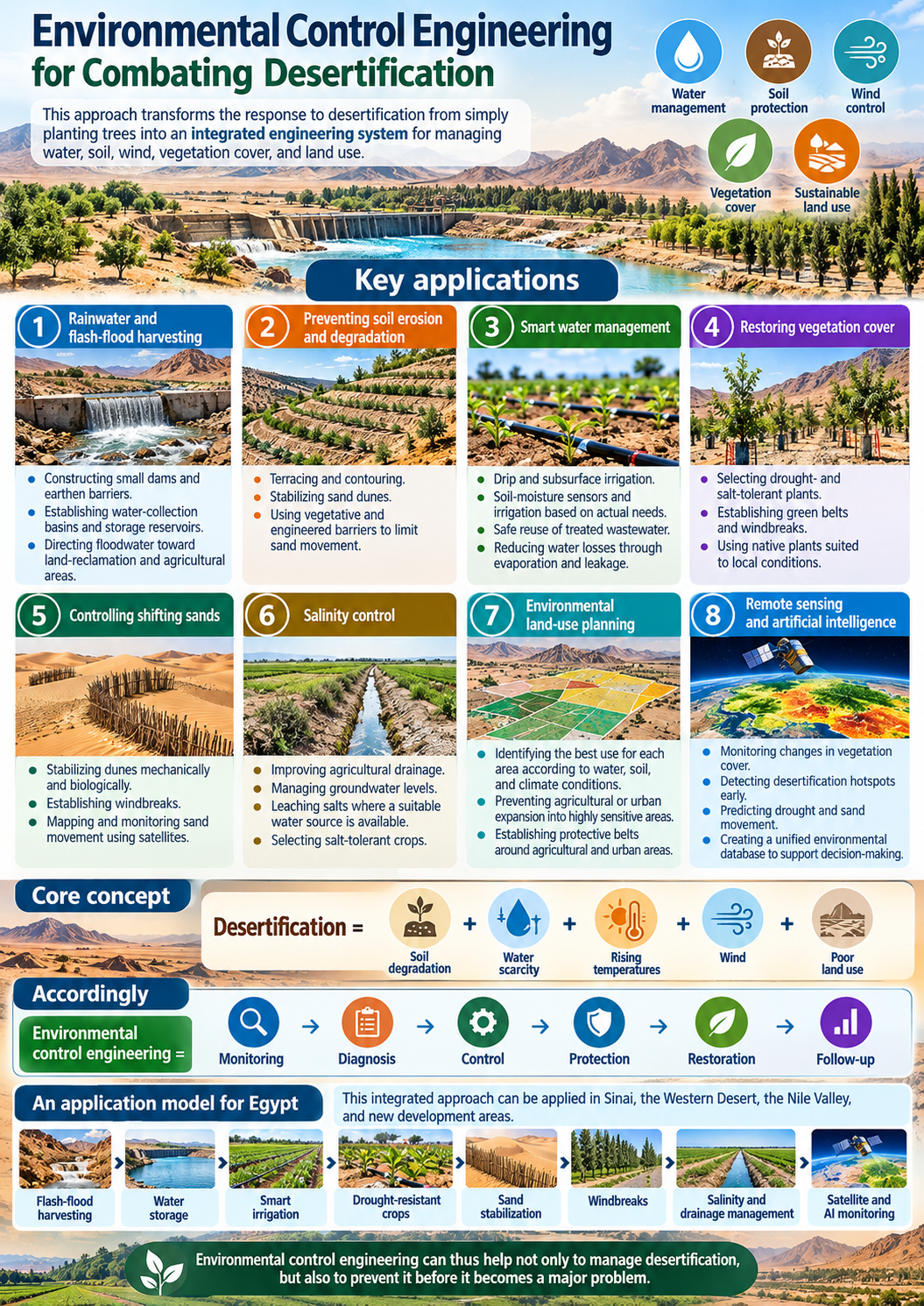
This approach transforms the response to desertification from simply planting trees into an integrated engineering system for managing water, soil, wind, vegetation cover, and land use.
Key applications
1- Rainwater and flash-flood harvesting
- Constructing small dams and earthen barriers.
- Establishing water-collection basins and storage reservoirs.
- Directing floodwater toward land-reclamation and agricultural areas.
2- Preventing soil erosion and degradation
- Terracing and contouring.
- Stabilizing sand dunes.
- Using vegetative and engineered barriers to limit sand movement.
3- Smart water management
- Drip and subsurface irrigation.
- Soil-moisture sensors and irrigation based on actual needs.
- Safe reuse of treated wastewater.
- Reducing water losses through evaporation and leakage.
4- Restoring vegetation cover
- Selecting drought- and salt-tolerant plants.
- Establishing green belts and windbreaks.
- Using native plants suited to local conditions.
5- Controlling shifting sands
- Stabilizing dunes mechanically and biologically.
- Establishing windbreaks.
- Mapping and monitoring sand movement using satellites.
6- Salinity control
- Improving agricultural drainage.
- Managing groundwater levels.
- Leaching salts where a suitable water source is available.
- Selecting salt-tolerant crops.
7- Environmental land-use planning
- Identifying the best use for each area according to water, soil, and climate conditions.
- Preventing agricultural or urban expansion into highly sensitive areas.
- Establishing protective belts around agricultural and urban areas.
8- Remote sensing and artificial intelligence
- Monitoring changes in vegetation cover.
- Detecting desertification hotspots early.
- Predicting drought and sand movement.
- Creating a unified environmental database to support decision-making.
Core concept:
Desertification = soil degradation + water scarcity + rising temperatures + wind + poor land use.
Accordingly:
Environmental control engineering = monitoring → diagnosis → control → protection → restoration → follow-up.
An application model for Egypt
This integrated approach can be applied in Sinai, the Western Desert, the Nile Valley, and new development areas:
Flash-flood harvesting → water storage → smart irrigation → drought-resistant crops → sand stabilization → windbreaks → salinity and drainage management → satellite and AI monitoring.
Environmental control engineering can thus help not only to manage desertification, but also to prevent it before it becomes a major problem.