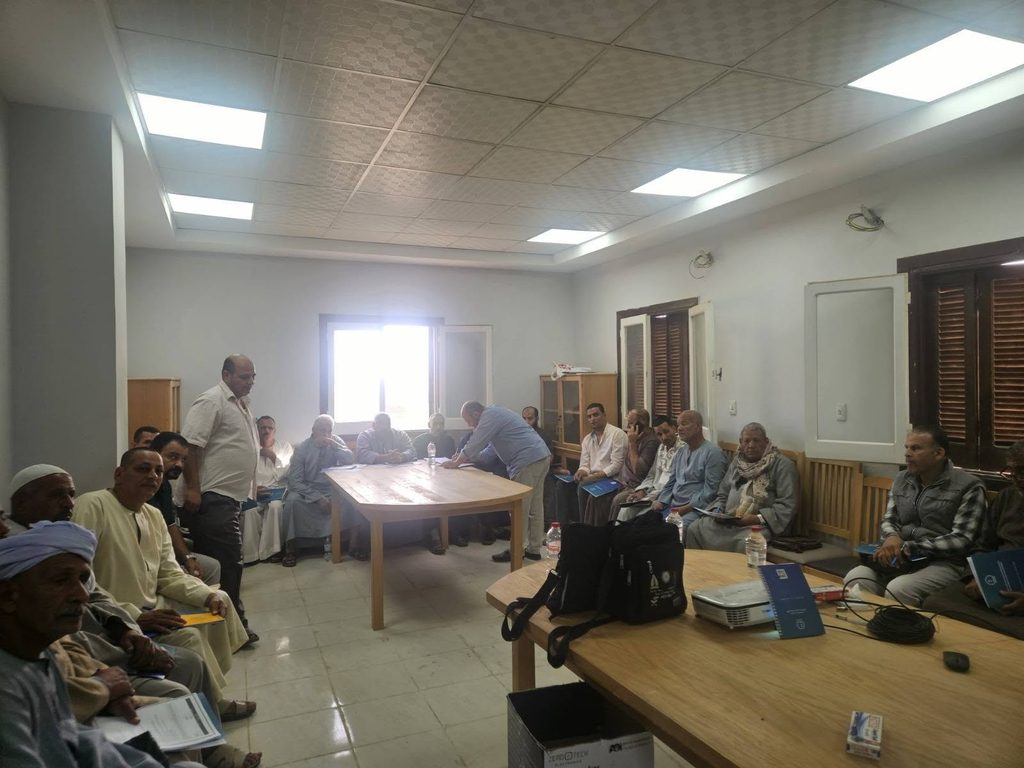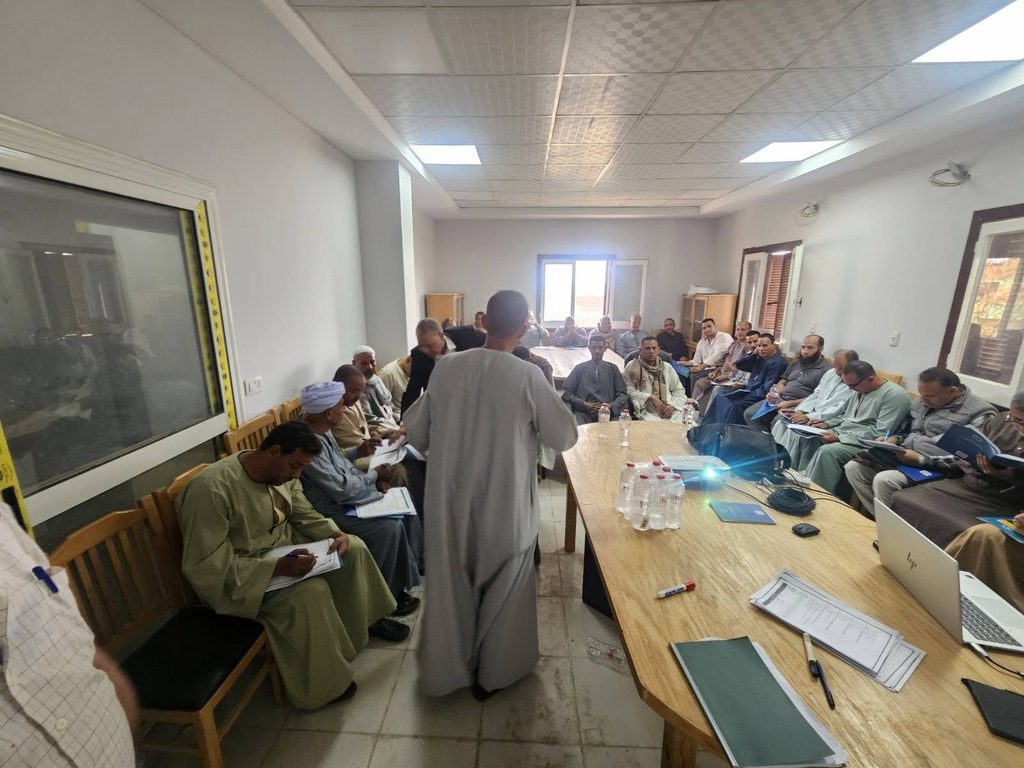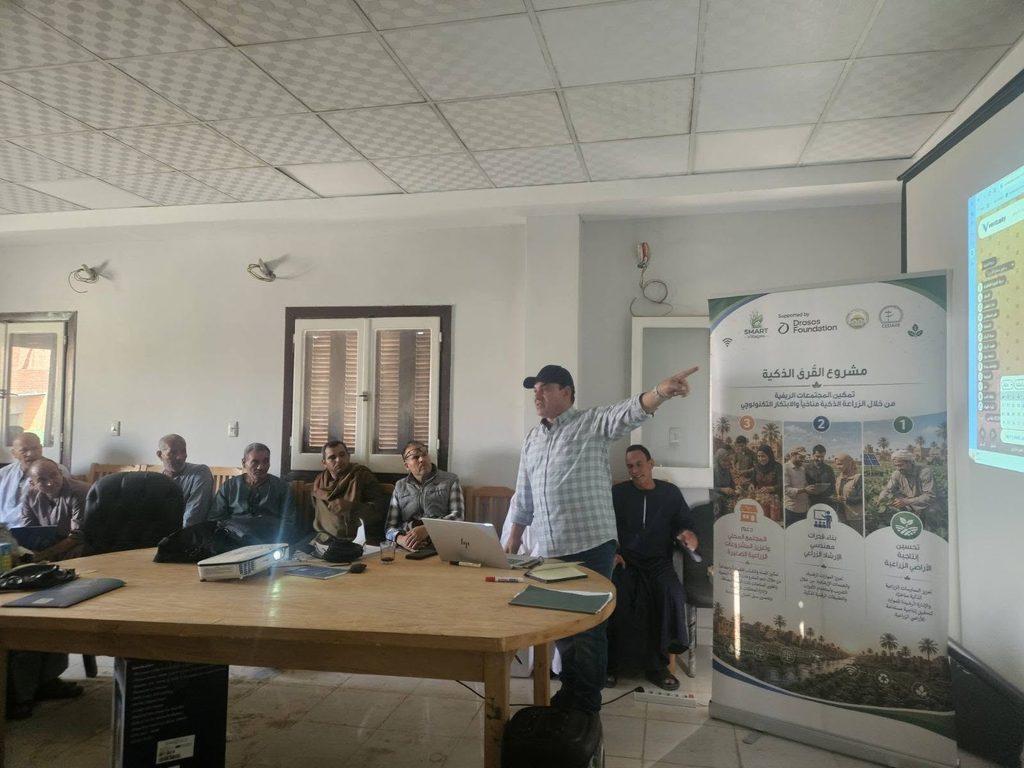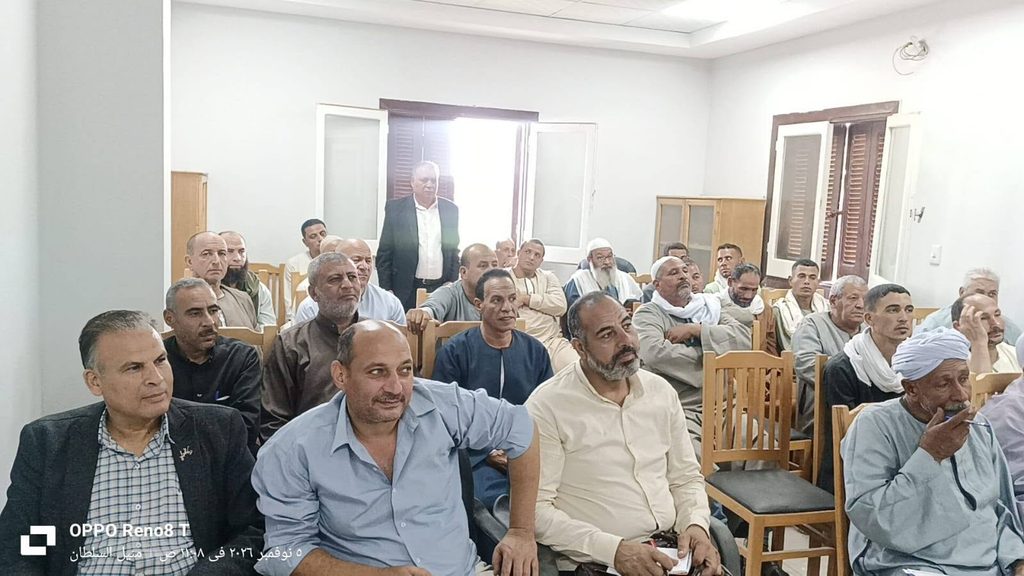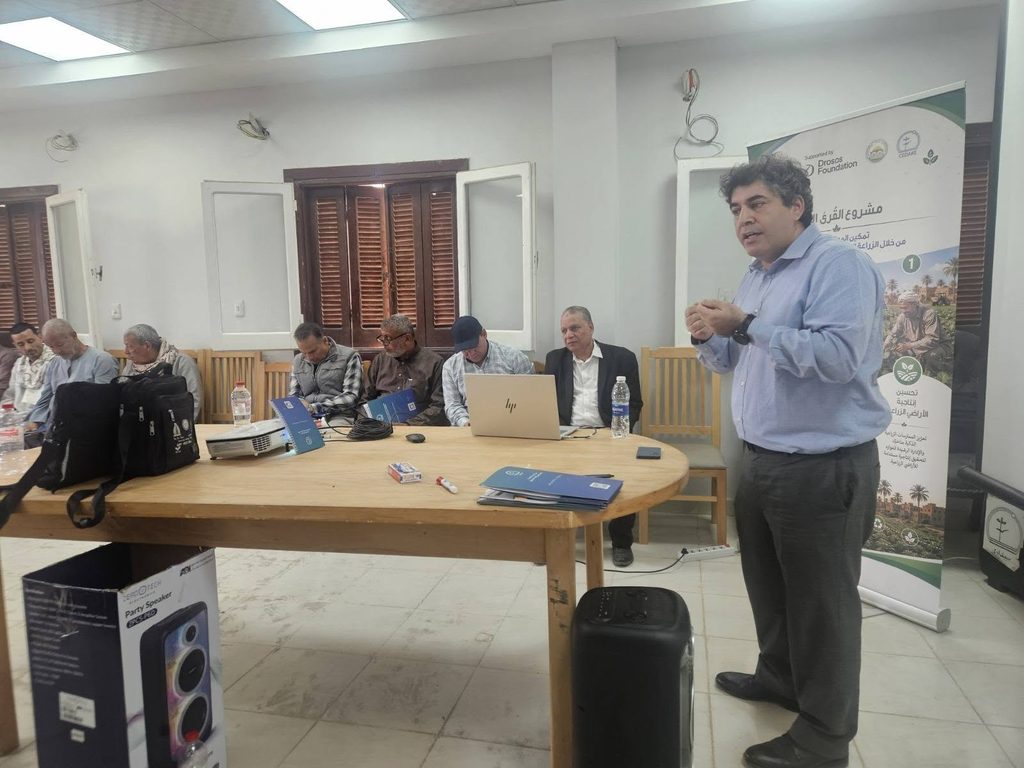
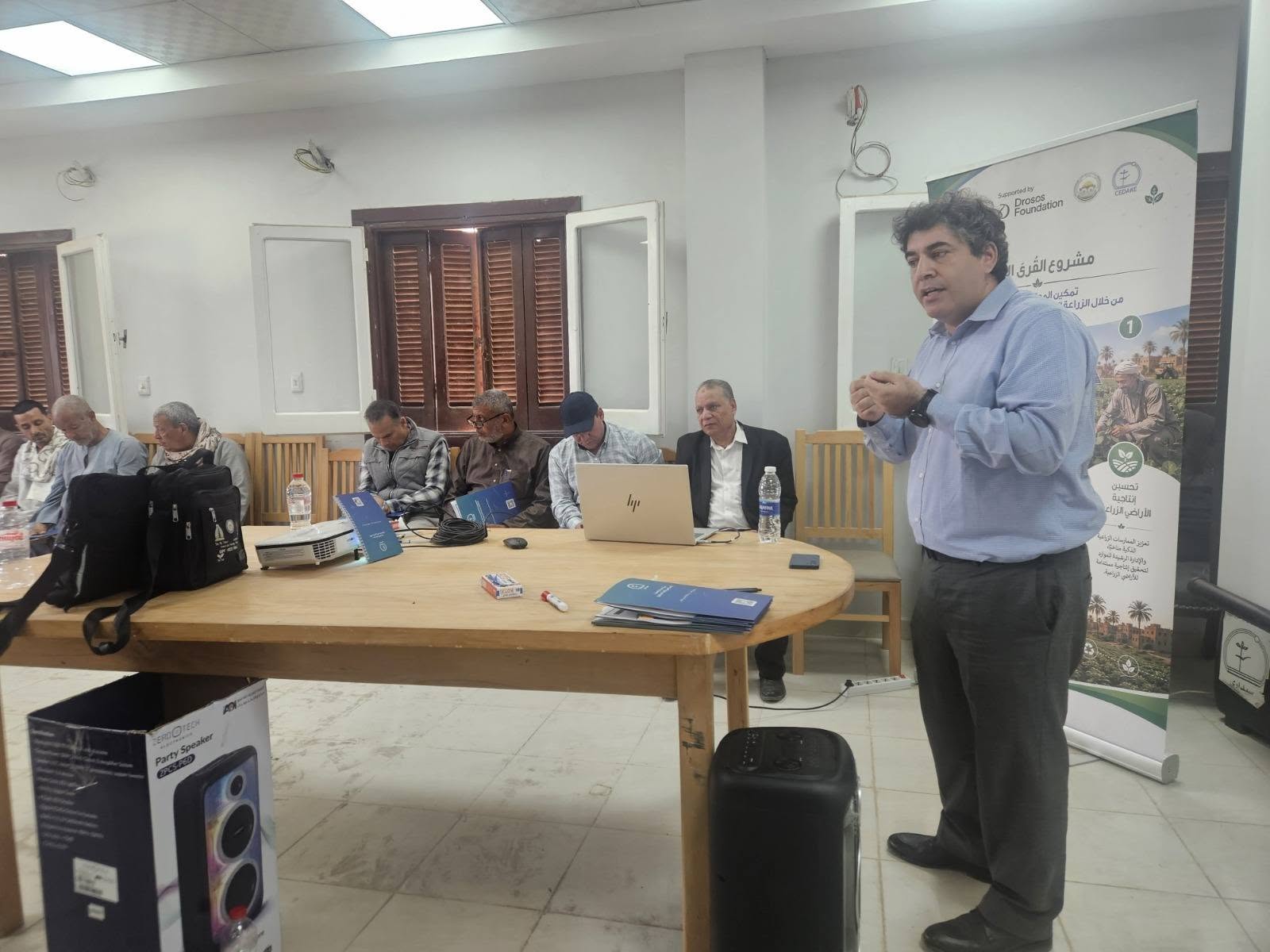
The Centre for Environment and Development for the Arab Region and Europe (CEDARE) held a training workshop in Atfih as part of the project ‘Promoting Economic Independence and Community Empowerment through Climate-Smart Agriculture and Technological Innovation (Smart Villages)’, funded by the Drosos Foundation. The workshop was organized in collaboration with the Giza Governorate Directorate of Agriculture, the Atfih District Agricultural Administration and other relevant stakeholders. It took place at the headquarters of the Atfih District Agricultural Administration and brought together 32 agricultural extension engineers and rural community leaders from the district.
The workshop aimed to deepen participants’ understanding of the causes of climate change, how it is manifesting in Egypt, and how it affects crops. It also introduced practices that can help farmers adapt to these impacts, maintain crop yields and quality, and reduce production costs.
Participants explored ways to use irrigation water more efficiently, including laser land levelling, drip irrigation and improved irrigation systems, planting on raised beds, choosing when to irrigate and mulching the soil. The workshop also covered crop management practices such as selecting heat- and salinity-tolerant varieties, adjusting planting dates and applying fertilizers appropriately.
The workshop focused on equipping participants to share what they had learnt, pass on practical recommendations and exchange experiences with farmers in their communities. Participants also developed individual action plans to support the adoption of these practices in the field.
The workshop forms part of CEDARE’s efforts to help rural communities adapt to the impacts of climate change and contribute to food security by promoting farming practices that enable farmers to use irrigation water more efficiently and maintain crop yields and quality.