Unplugging Climate Commitments while Electrifying the Future
“It will be a ghost COP.”
— Mohamed Adow, Director of Power Shift Africa, warning about the weakening of commitments in the revised COP31 draft decision, 19 November 2026.
COP31 Accelerates Electrification While Climate Adaptation Finance and Fossil Fuel Commitments Remain in Limbo
As the venue empties and the pavilions are dismantled, what has this COP actually delivered? If obligations can be stripped away and the reference to fossil fuels simply disappears, who is accountable for the widening gap between promises and action?
On Day 10 in Antalya, COP31 witnessed a striking contrast between accelerating climate action outside the negotiating rooms and persistent political deadlock within them. The launch of a major global Electrification Delivery Package demonstrated growing momentum towards cleaner energy systems. Yet the revised draft cover decision removed explicit references to transitioning away from fossil fuels and failed to establish a quantified adaptation finance target. As billions in investment plans and new commitments were announced, fundamental questions remained unanswered about who would finance the transition, who would benefit and whether vulnerable countries would receive the support they need.
Key Highlights of the Day
• Fossil Fuels Disappear from the Draft Decision: The COP31 Presidency released a shorter revised cover decision that omitted references to transitioning away from fossil fuels, while retaining Türkiye’s proposed target of increasing electricity’s share of final energy consumption to 35% by 2035 (Climate Home news, 2026).
• Global Electrification Gains Momentum: The COP31 Electrification Delivery Package brought together actions involving over 150 countries plus the EU, 37 cities and more than 260 businesses. Initiatives covered renewable energy, power grids, storage, electric transport and industrial electrification. UN Climate Change Executive Secretary Simon Stiell described the announcement as a major moment for global climate action (UNFCCC, 2026).
• Adaptation Finance Remains a Major Sticking Point: The revised cover decision omitted a proposed benchmark of at least USD 120 billion annually by 2035 for adaptation finance, sought by African countries and Least Developed Countries. The disagreement exposed the continuing gap between collective adaptation ambitions and clear financial delivery obligations.
• New Financing for Clean Energy: The UK announced a £400 million contribution to the Climate Investment Funds’ AMPLIFi mechanism, aiming to mobilize up to £5 billion for clean electricity, grids and storage in emerging and developing economies. AIB doubled its 2030 green and transition lending target to €60 billion, Octopus Energy launched an Asia Electrification Fund targeting $600 million, and BBVA reported nearly €60 billion in electrification-related sustainable business activity (UNFCCC, 2026).
• Ocean Protection Enters the Political Agenda: The revised draft advanced ocean-related dialogue and future reporting through the proposed Antalya Ocean Current initiative, while debates continued over marine protection, carbon removal approaches and the need to move from dialogue to practical implementation.
A Fundamental Question: Is COP31 ending with a meaningful outcome, or has it become the “ghost COP” many feared?
Key Takeaway
COP31 is revealing two increasingly distinct realities: the rapid expansion of clean energy investment and the deadlock of international climate negotiations, obligations and finance.
Messages for Action
1. To Country Leaders and Decisionmakers
Demand predictable adaptation finance and ensure that new financial mechanisms provide affordable access to clean technologies without increasing debt vulnerabilities.
2. To Climate Experts and Development Practitioners
Bridge Investment, Innovation and Climate Justice. Strengthen institutional readiness, assess environmental and socioeconomic impacts, and integrate super-pollutant mitigation and nature-based solutions into climate investment planning.
3. To the Public
Demand climate justice and keep ambition alive, especially on the adaptation finance that vulnerable communities have long been promised and are still waiting to receive.
Our Session of the Day
Arab Climate Pavilion
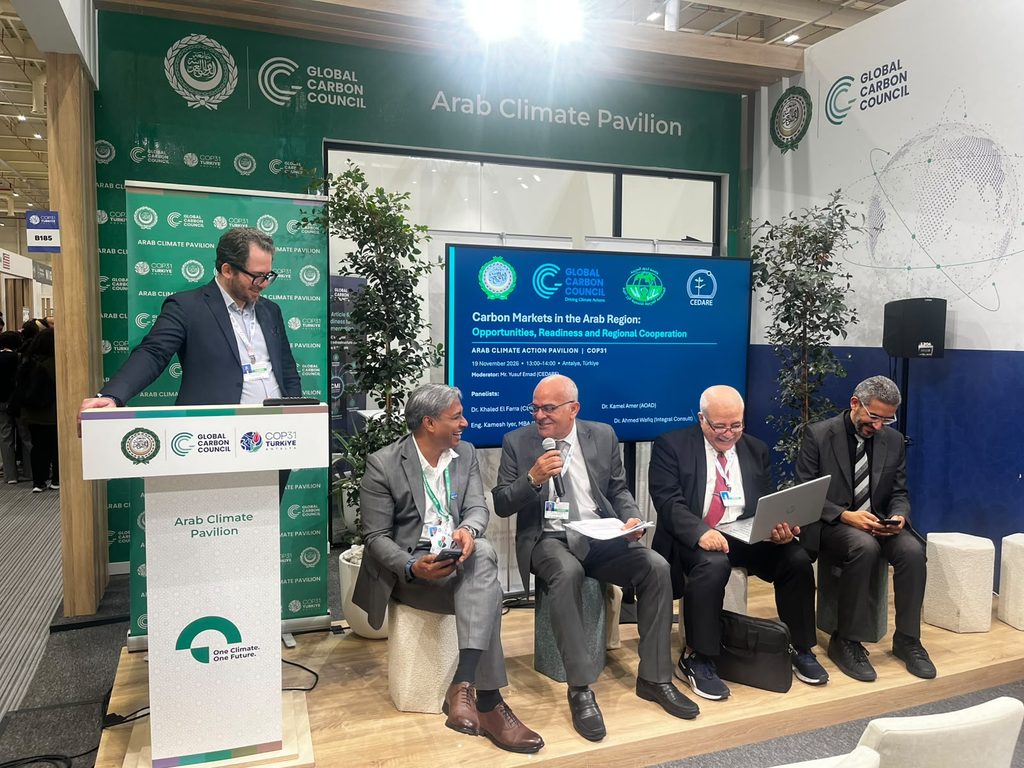
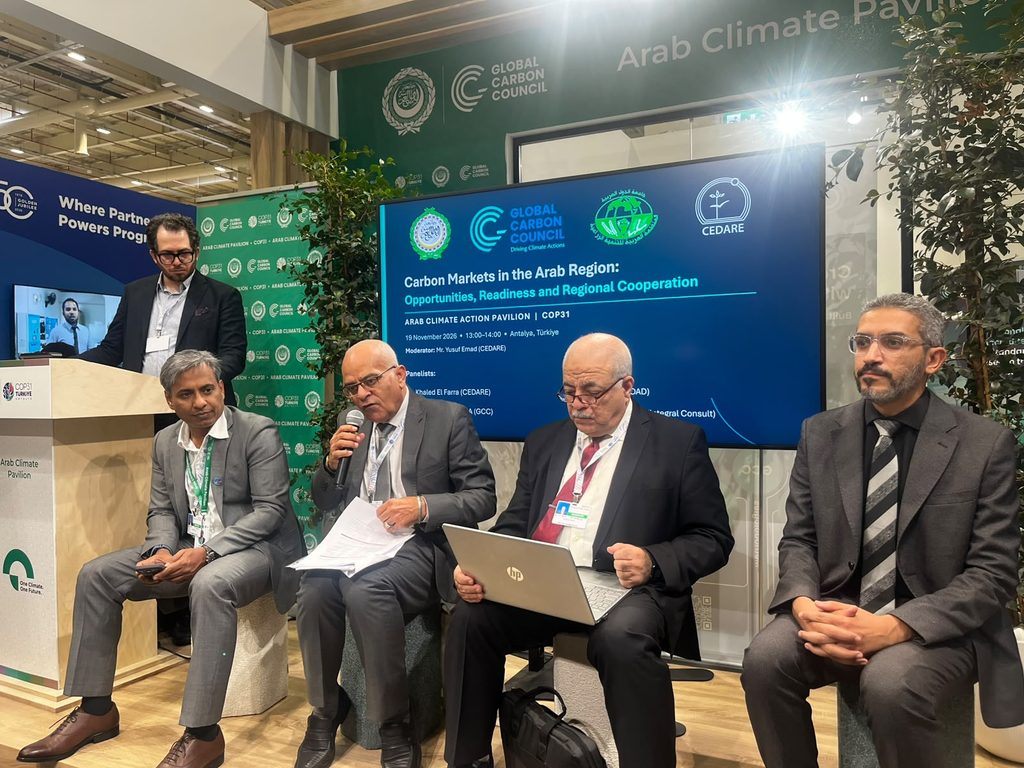
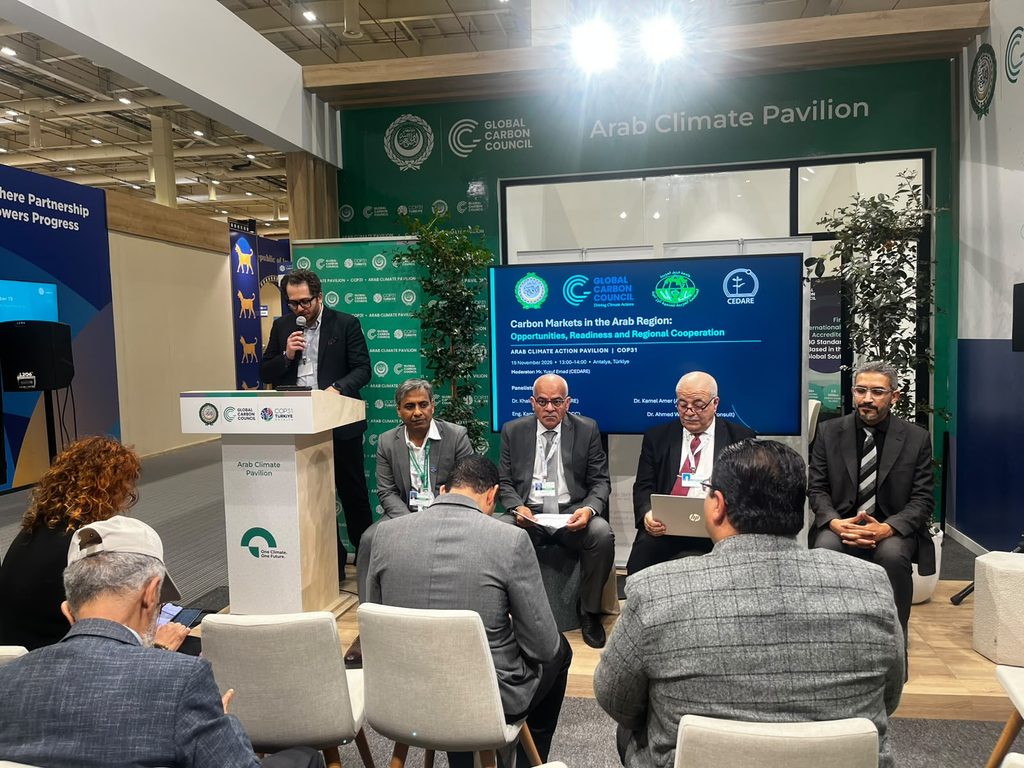
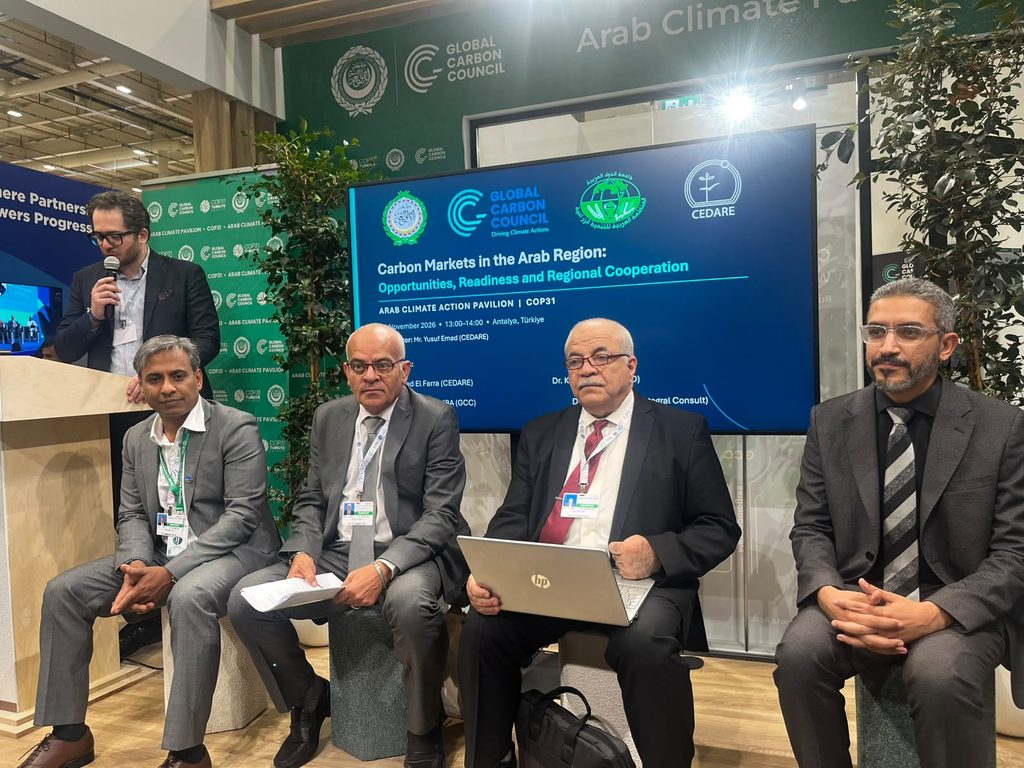
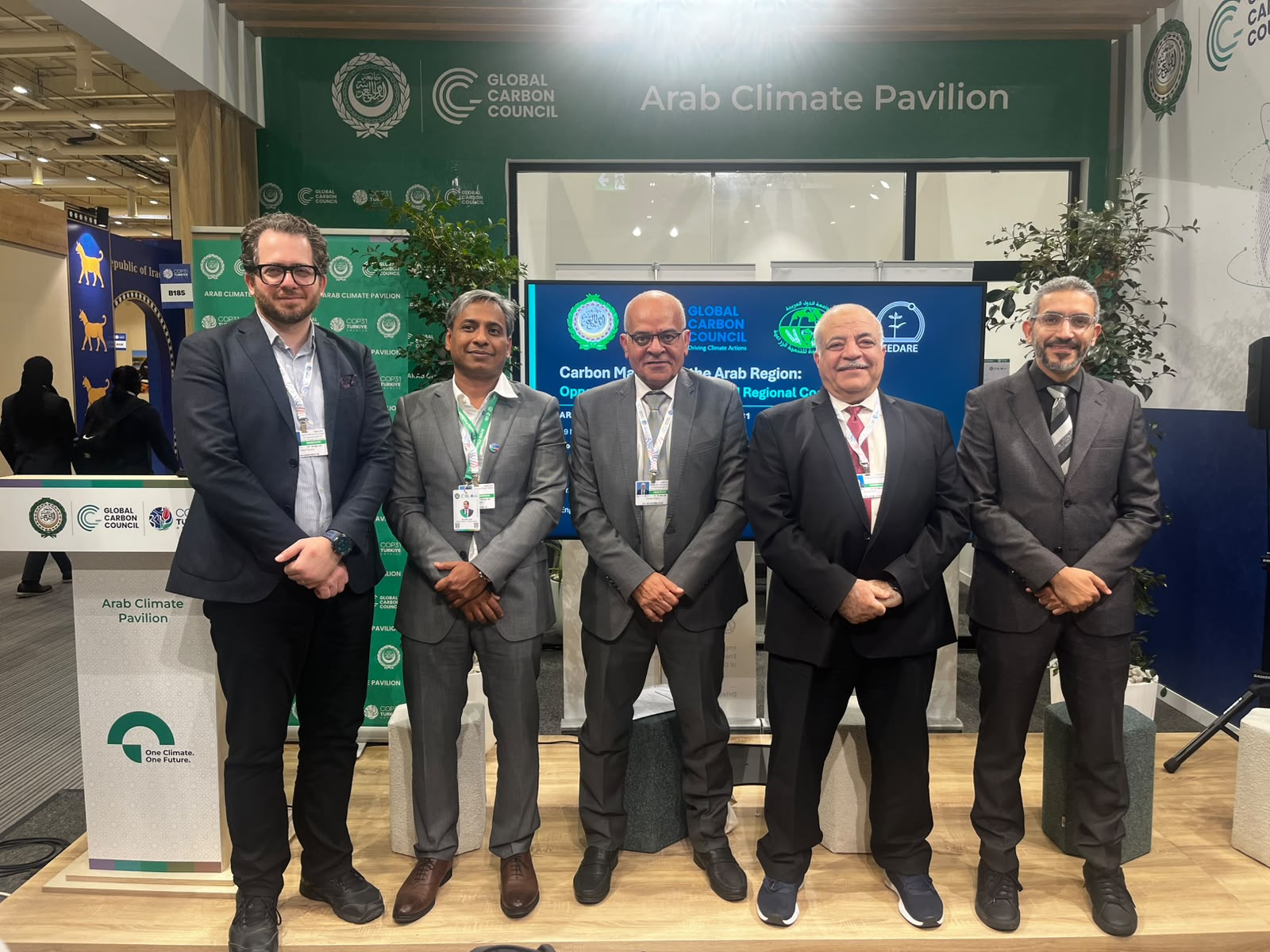
Carbon Markets in the Arab Region: Opportunities, Readiness and Regional Cooperation
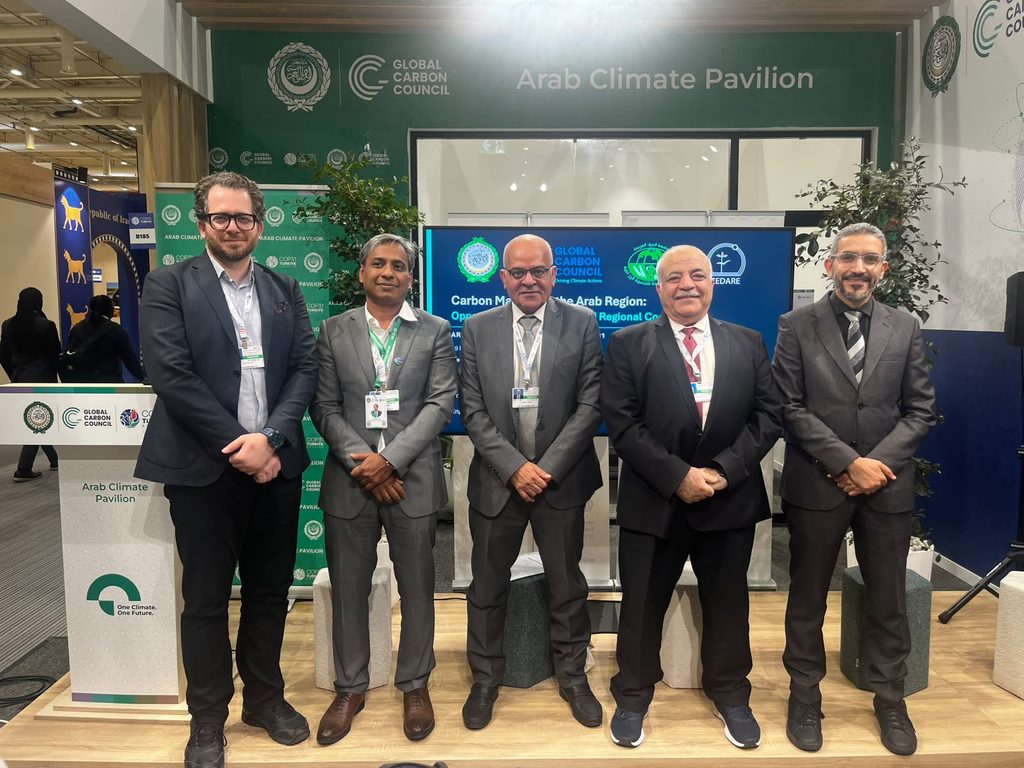
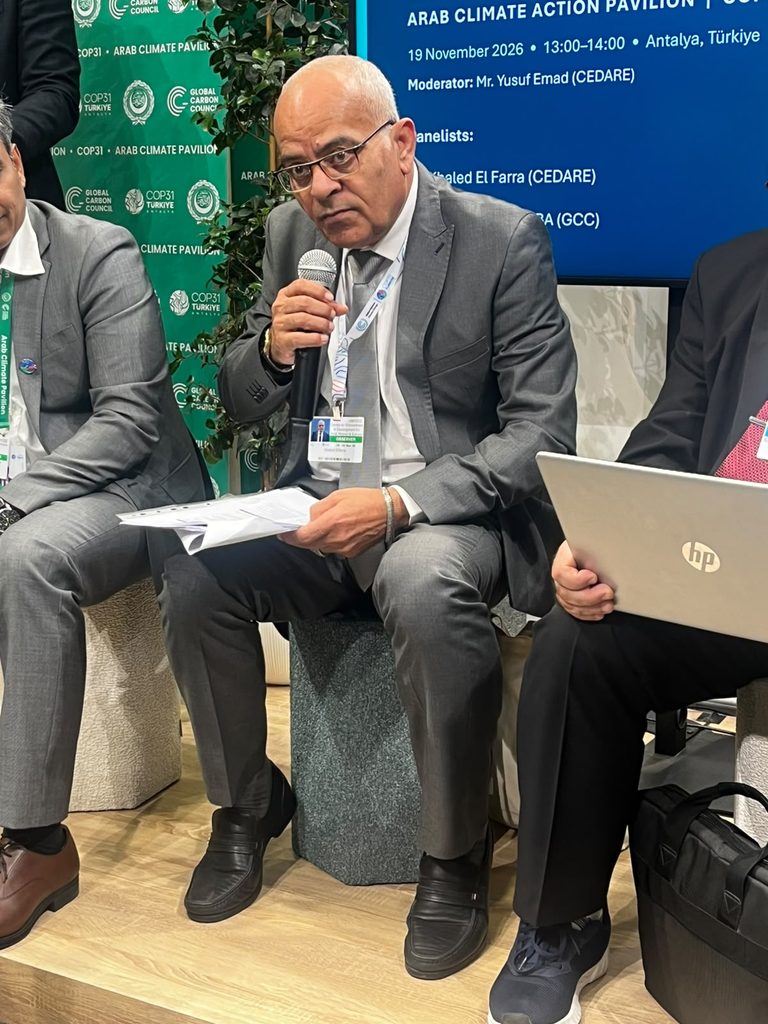
Organized by CEDARE, the session explored a central question for the Arab region: How can carbon market opportunities translate into credible climate investment and tangible development benefits, including for smallholder farmers? Moderated by CEDARE’s Mr. Yusuf Younis, the session brought together Dr. Khaled El Farra, Senior Regional Lead Technical Consultant, Green Economy Transition Work Group at CEDARE; Dr. Ahmed Wafiq, CEO of Integral Consult; Dr. Kamesh Iyer, Senior Advisor to the Global Carbon Council; and Dr. Kamel Amer, Head of the Regional Office for the Arab Organization for Agricultural Development.
The discussion highlighted how credible governance, robust MRV, transparent carbon accounting and accessible financing can turn regional carbon market opportunities into climate investment and development benefits. It emphasized agricultural projects and smallholder farmers, noting that regional cooperation and shared services could strengthen capacity, improve market access and ensure benefits reach local communities.