
Are Annex 1 countries galloping “All in”?
“We need to reengage in these international agreements, and we need to recognize that China is outpacing us in many critical areas.”
— Governor Newsom of California
US State Leaders Flex Climate Muscle at COP31 Despite Federal No-Show
While President Donald Trump’s administration continues to bypass UN climate summits, a massive unofficial delegation of over 120 U.S. state and local leaders, including governors like Minnesota’s Tim Walz, New Mexico’s Michelle Lujan Grisham, and California’s Gavin Newsom, descended upon COP31 in Antalya to prove that American climate action is far from dead. Representing the “America Is All In” coalition, these officials highlighted aggressive sub-national initiatives, such as New Mexico slashing methane emissions and Minnesota targeting a 100% carbon-free grid by 2037. Although experts noted that Washington’s absence has severely damaged U.S. international credibility and economic competitiveness against rapidly advancing rivals like China, the sub-national leaders sought to reassure global delegates that a massive undercurrent of local support remains deeply committed to the Paris Agreement’s trajectory.
Key Highlights of the Day:
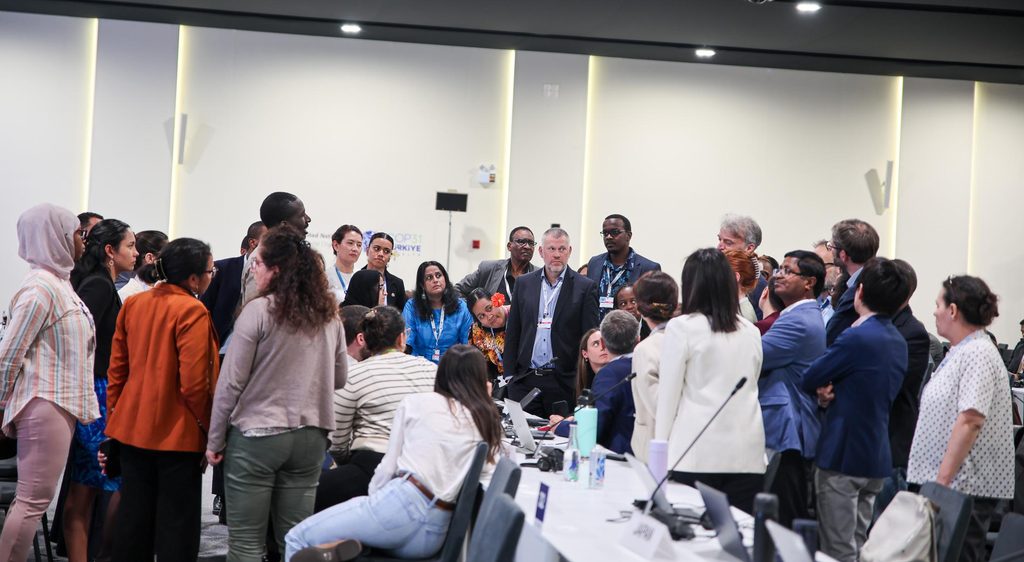
• Continued Cover Text Battles: Incoming ministers moved to tackle deep divisions over the first draft of the main political outcome (cover decision), which spans 160 countries’ demands.
• Fossil Fuel & Electrification Pushback: The Arab Group, Russia, and other major producers raised strong rejections or red lines against proposed language calling for an accelerated phase-out of fossil fuels and aggressive electrification targets.
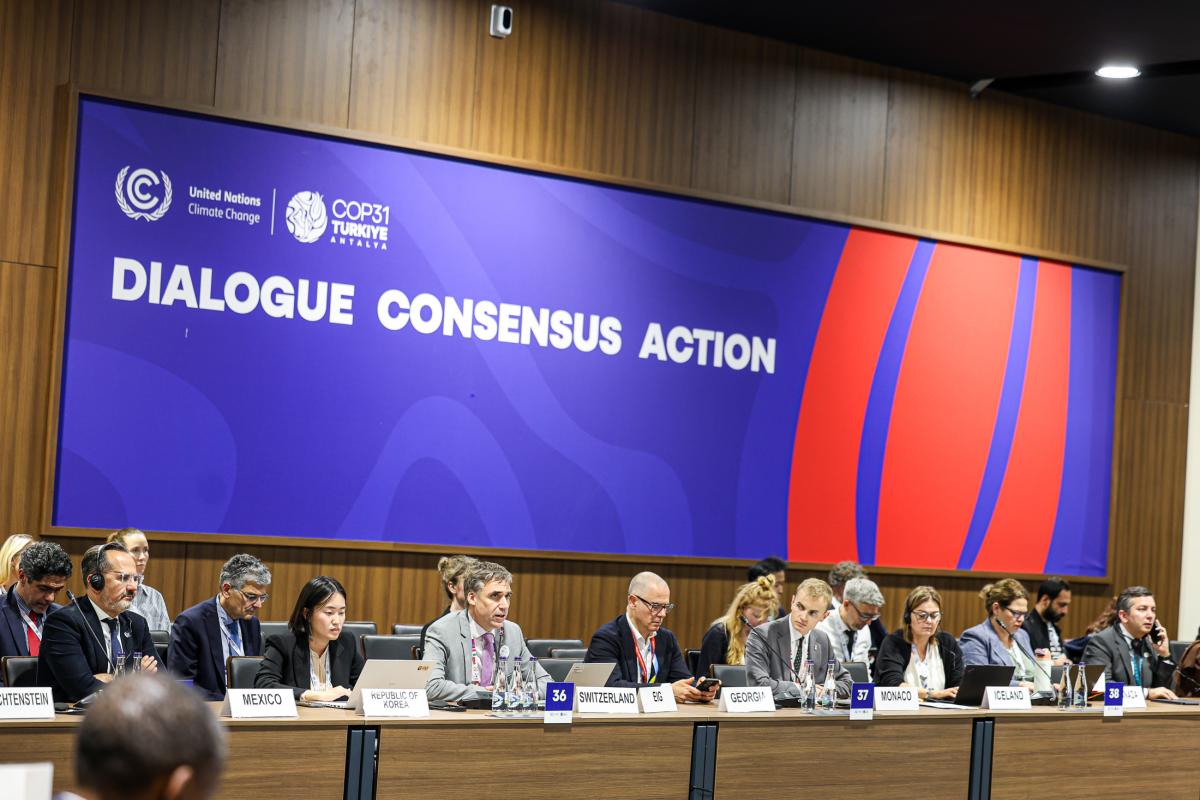
• Climate Finance Work Programme (CFWP) Stalls: Developing nations and small island states pushed to extend the CFWP for two more years with explicit goals (such as tripling adaptation finance), while the EU and Switzerland argued against taking on new binding financial commitments.
• IPCC Timelines Row: China, Russia, and Saudi Arabia pushed back against tight timelines for the IPCC’s seventh assessment, arguing they disadvantage developing countries, a stance criticized by Least Developed Countries (LDCs).
• CCAC Ministerial & Super Pollutants: The Climate and Clean Air Coalition (CCAC) ministerial co-chaired by Brazil and the UK built high-level momentum around cutting methane and super pollutants.
• AI Agents in Denial: an UN-backed study published during the summit revealed a glaring flaw in the software itself. Popular AI chatbots quickly revert to climate crisis denial when subjected to even mild user challenges. Tech giants are rapidly driving up global power grid demands to expand data centres, while their underlying models fail basic information integrity tests on climate science.
Fundamental Question for COP31: Are we looking for more unfulfilled promises from the Developed countries?
Key Takeaway
Developed countries must move beyond renewed climate pledges to deliver on past promises, balancing ambitious emission reductions with fair financing, technology transfer and development priorities. At the same time, AI must become a trustworthy catalyst for climate action, not a new source of misinformation, energy demand or inequality, through responsible innovation and strong safeguards.
Messages for Action
1. To Country Leaders and Decision-Makers: Turn Climate Leadership into Shared Responsibility
Strengthen Arab unity in defending equitable climate finance, differentiated responsibilities and national development priorities, while advancing regional cooperation and climate action that delivers tangible economic and social benefits.
2. To Climate Experts and Development Practitioners: Bridge Science, Policy and Local Realities
Translate climate science into practical, evidence-based solutions, strengthen the integrity of climate information, and promote locally led nature-based solutions that reflect community needs and priorities.
3. To the Public: Climate Action Starts with People
Climate leadership is not limited to national governments. Cities, communities and citizens can drive meaningful change. Effective climate solutions must be developed with people, not for them, protecting livelihoods, strengthening resilience and ensuring no community is left behind.