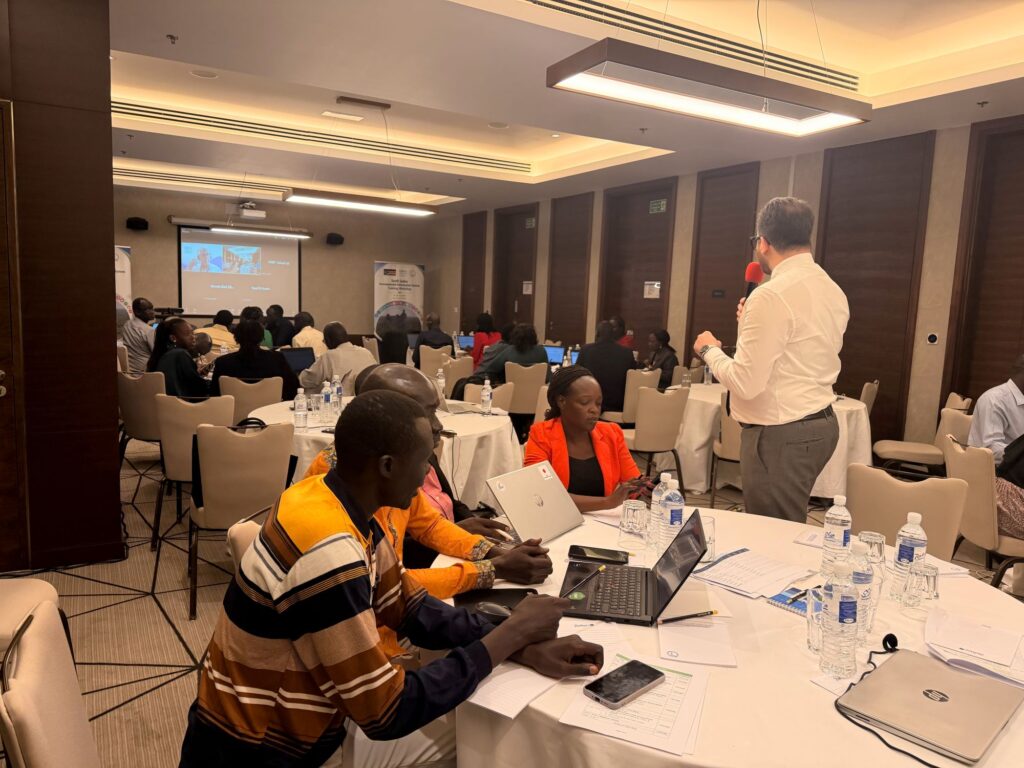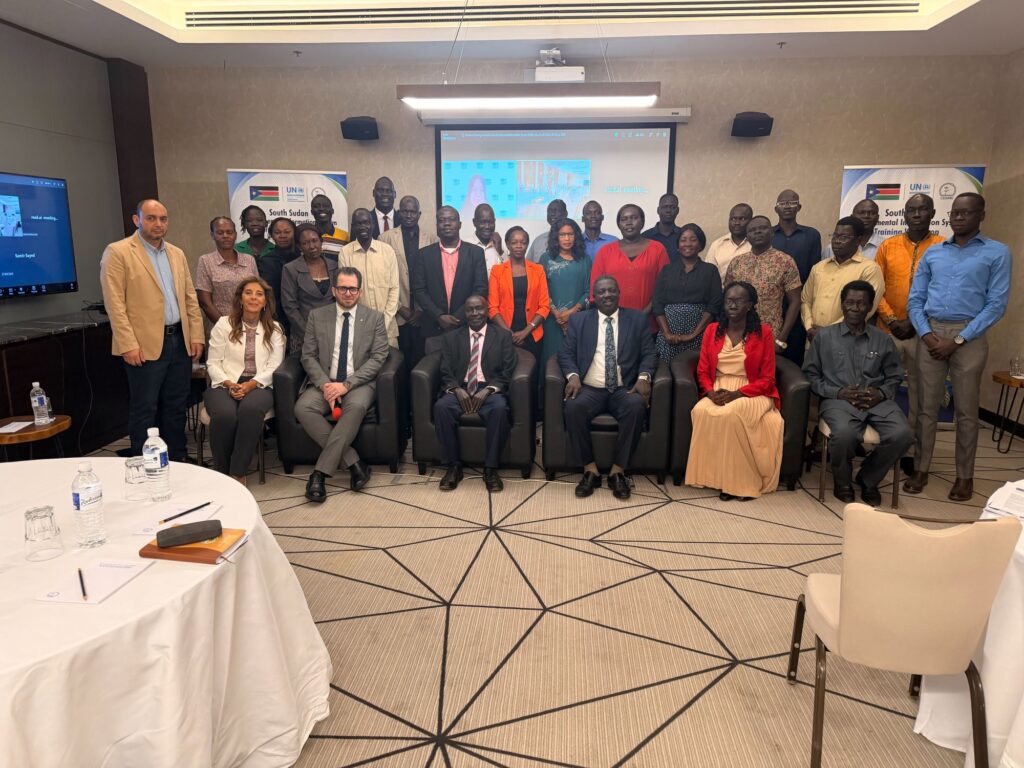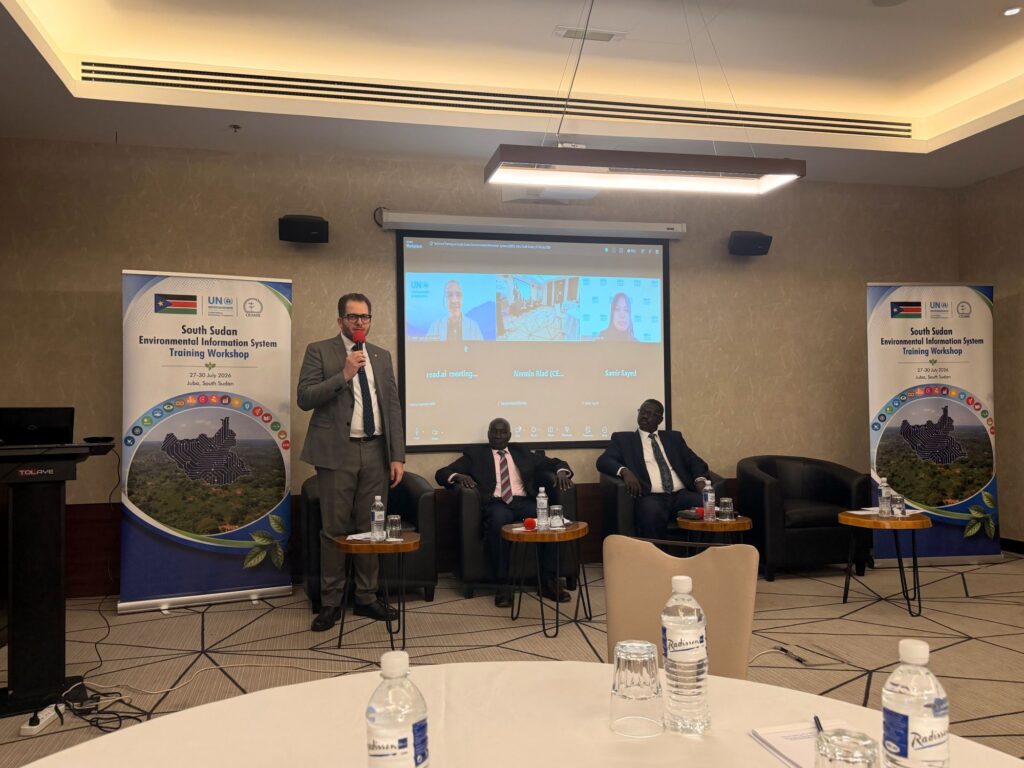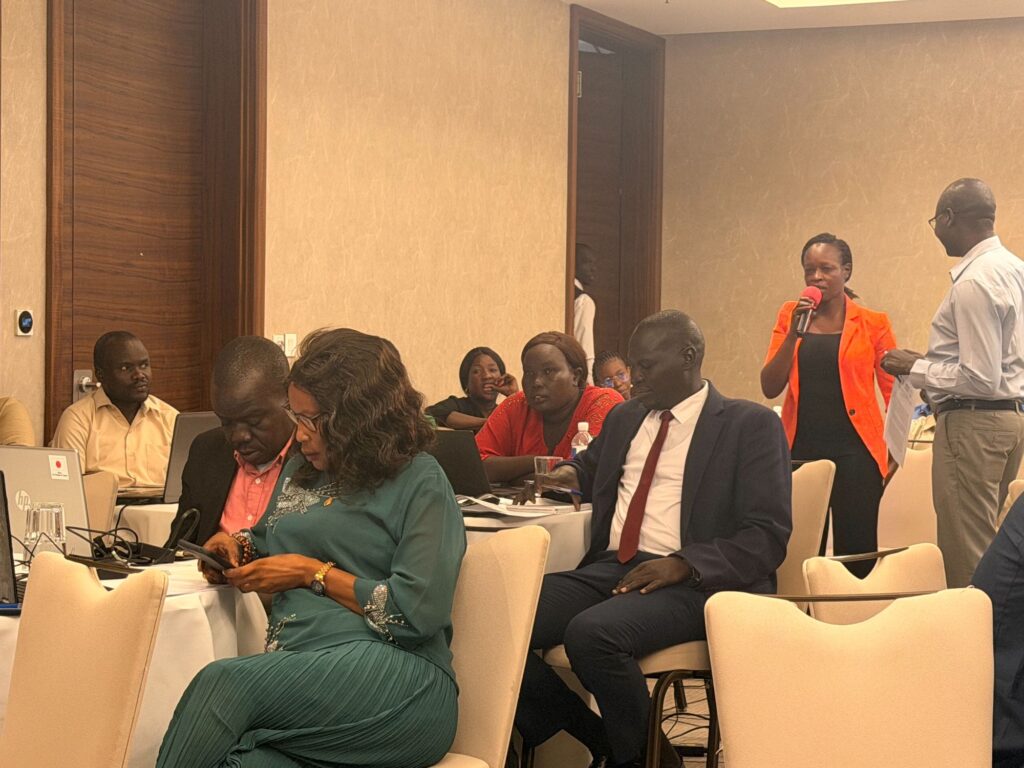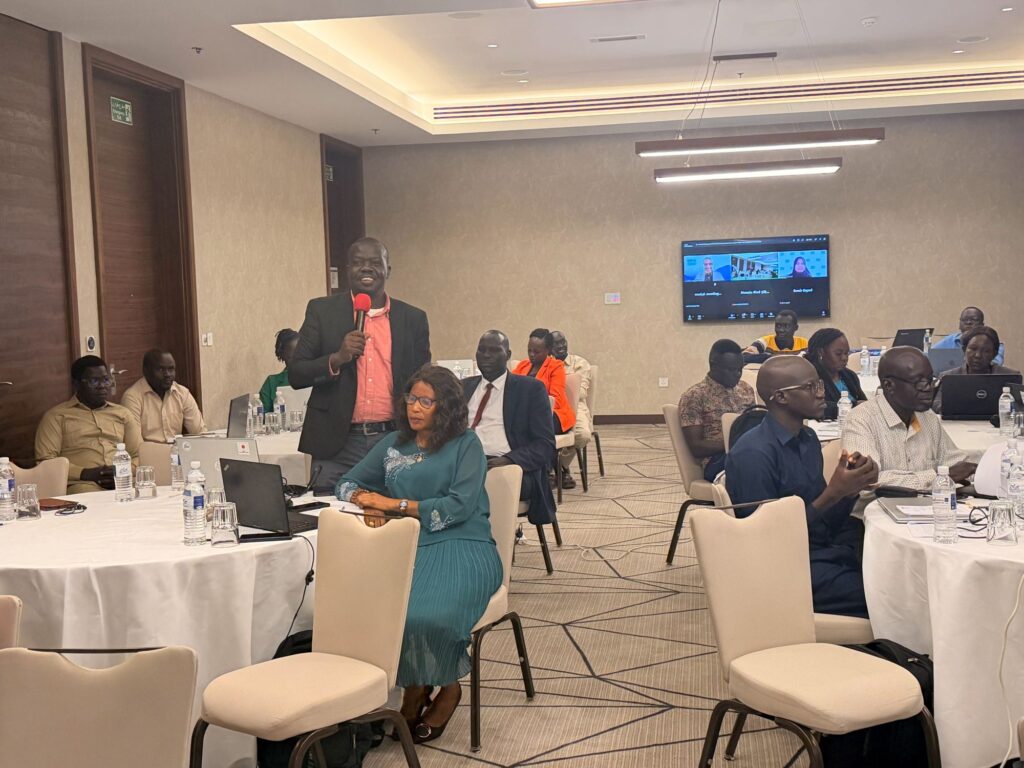
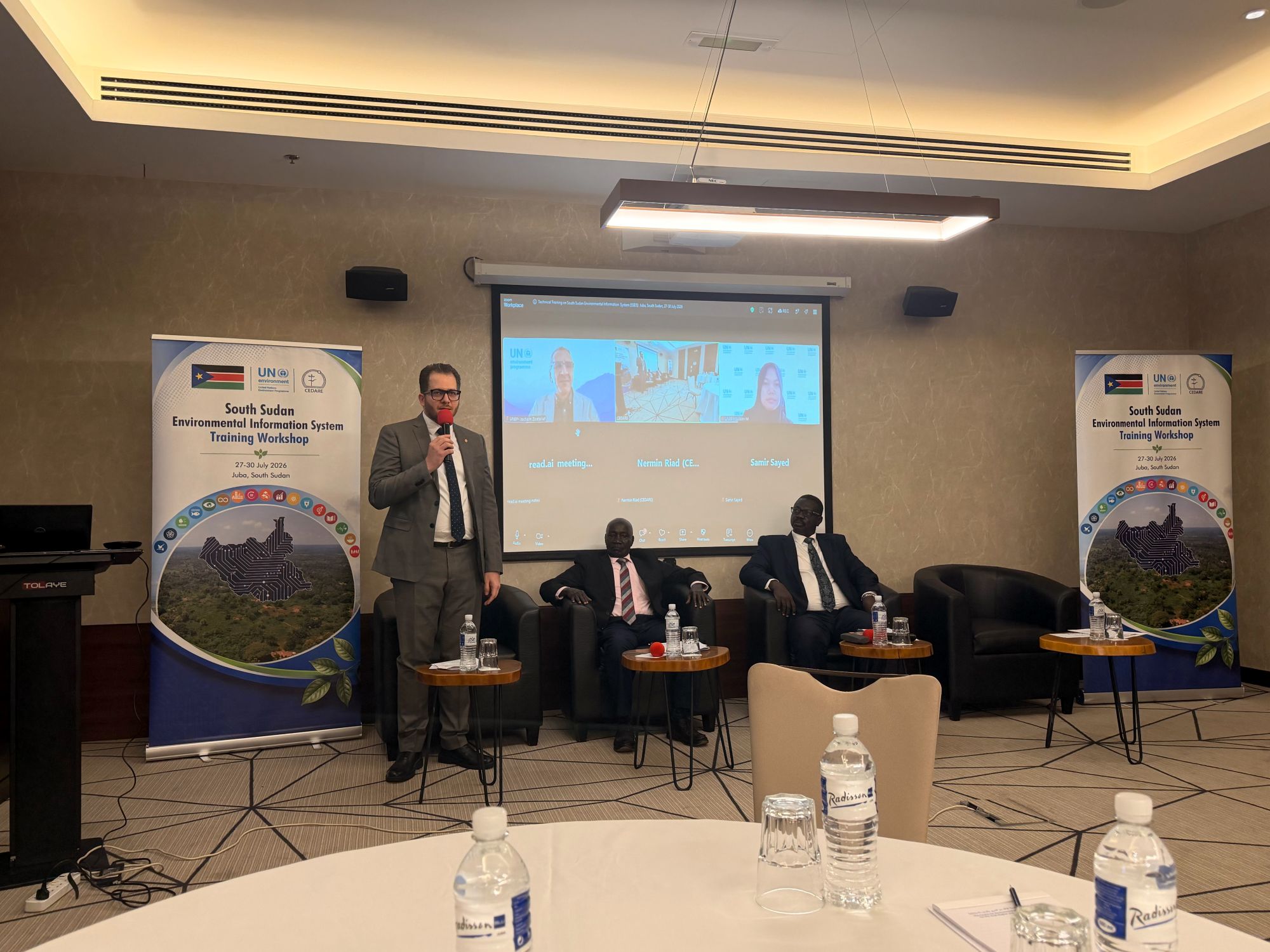
The Centre for Environment and Development for the Arab Region and Europe (CEDARE), in partnership with the Ministry of Environment and Forestry (MoEF) and the United Nations Environment Programme (UNEP), has organized a four-day Technical Training on the South Sudan Environmental Information System (SSEIS) in Juba. The workshop brings together representatives from government institutions, technical agencies, academia, and development partners to strengthen national capacities in environmental information management, data sharing, and evidence-based decision-making.
The workshop reflects CEDARE’s commitment and strong partnership with the African countries and international organizations working to advance environmental governance and climate resilience through digital transformation and institutional capacity building.
The workshop was officially opened by Eng. Otwari Mark, Chief of the National Bureau of Statistics (NBS); Mr. David Batali Oliver, Undersecretary of the Ministry of Environment and Forestry (MoEF); Mr. Jochem Zoetelief, Head of the Climate Early Warning Section, Climate Change Division, United Nations Environment Programme (UNEP); Ms. Sulastri M., representing UNEP; and Mr. Yusuf Younis, the project manager representing CEDARE.
In their opening remarks, the speakers underscored the importance of strengthening South Sudan’s environmental information systems to support evidence-based policymaking, sustainable natural resource management, climate adaptation, and environmental reporting. They highlighted that effective environmental governance depends on reliable, accessible, and well-coordinated environmental data, supported by strong collaboration among national institutions and development partners.
Representing UNEP, Mr. Jochem Zoetelief emphasized the strategic importance of strengthening national environmental information systems as a foundation for climate resilience, early warning, environmental planning, and informed decision-making. He reaffirmed UNEP’s commitment to supporting South Sudan in building sustainable institutional capacities and enhancing national environmental data management.
Representing CEDARE, Mr. Yusuf Younis reaffirmed the Centre’s continued commitment to supporting South Sudan through technical assistance, institutional capacity development, and the implementation of modern environmental information systems that contribute to national environmental assessment and sustainable development planning.
The four-day technical training focuses on equipping participants with practical skills to operate and manage the South Sudan Environmental Information System (SSEIS). Participants will receive hands-on training covering environmental indicators, Sustainable Development Goals (SDG) data management, State of the Environment (SOE) reporting, environmental assessment methodologies, institutional data-sharing protocols, and system administration. The programme combines technical presentations with practical exercises designed to strengthen national expertise in environmental data analysis and reporting.
Developed through the collaboration of UNEP, CEDARE, and the Ministry of Environment and Forestry, the South Sudan Environmental Information System provides a comprehensive national platform for managing environmental and socio-economic information. The system enables institutions to compile, analyse, and share environmental data while supporting the preparation of State of the Environment reports, environmental assessments, and national reporting on the Sustainable Development Goals and other international environmental commitments.
he training workshop marks an important milestone in South Sudan’s efforts to strengthen environmental governance through digital innovation, institutional cooperation, and improved access to reliable environmental information. By enhancing national capacities in environmental information management, the initiative contributes to more informed policymaking and supports the country’s long-term environmental sustainability and climate resilience objectives.