
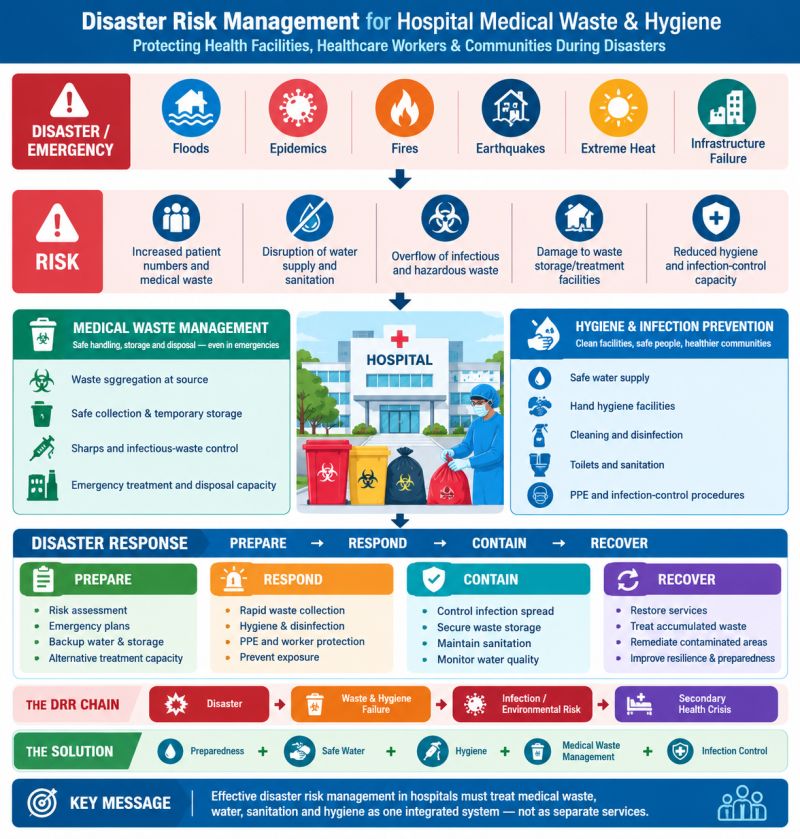
Protecting Health Facilities, Healthcare Workers & Communities During Disasters
DISASTER / EMERGENCY
Floods • Epidemics • Fires • Earthquakes • Extreme Heat • Infrastructure Failure
⬇️
1. RISK
Increased patient numbers and medical waste
Disruption of water supply and sanitation
Overflow of infectious and hazardous waste
Damage to waste storage/treatment facilities
Reduced hygiene and infection-control capacity
⬇️
2. CRITICAL CONTROLS
🗑️ Medical Waste Management
Waste segregation at source
Safe collection & temporary storage
Sharps and infectious-waste control
Emergency treatment and disposal capacity
🧼 Hygiene & Infection Prevention
Safe water supply
Hand hygiene facilities
Cleaning and disinfection
Toilets and sanitation
PPE and infection-control procedures
⬇️
3. DISASTER RESPONSE
PREPARE → RESPOND → CONTAIN → RECOVER
The DRR Chain
Disaster → Waste & Hygiene Failure → Infection/Environmental Risk → Secondary Health Crisis
↓
Preparedness + Safe Water + Hygiene + Medical Waste Management + Infection Control
KEY MESSAGE
Effective disaster risk management in hospitals must treat medical waste, water, sanitation and hygiene as one integrated system—not as separate services.
7
previous post