
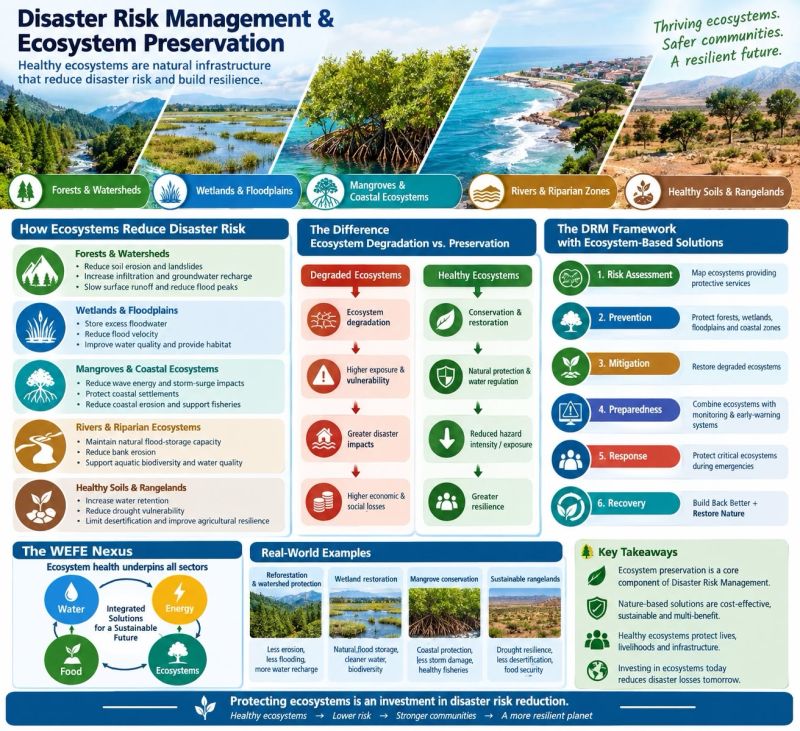
Ecosystem preservation is not only an environmental objective—it is a core component of Disaster Risk Management (DRM). Healthy ecosystems act as natural infrastructure, reducing exposure and vulnerability to floods, droughts, heatwaves, landslides and coastal hazards.
🌿 The DRM–Ecosystem Nexus
1. Forests & watersheds
* Reduce soil erosion and landslides
* Increase infiltration and groundwater recharge
* Slow surface runoff
* Reduce downstream flood peaks
2. Wetlands & floodplains
* Store excess floodwater
* Reduce flood velocity
* Improve water quality
* Provide biodiversity habitats
3. Mangroves & coastal ecosystems
* Reduce wave energy and storm-surge impacts
* Protect coastal settlements
* Reduce coastal erosion
* Support fisheries and livelihoods
4. Healthy soils & rangelands
* Increase water retention
* Reduce drought vulnerability
* Limit desertification
* Improve agricultural resilience
5. Rivers & riparian ecosystems
* Maintain natural flood-storage capacity
* Reduce bank erosion
* Support aquatic biodiversity
* Improve water quality
🔄 From “Respond to Disasters” → “Reduce Risk Before the Disaster”
Ecosystem degradation
↓
Higher exposure & vulnerability
↓
Greater disaster impacts
↓
Higher economic & social losses
Whereas:
Ecosystem conservation + restoration
↓
Natural protection & water regulation
↓
Reduced hazard intensity/exposure
↓
Greater resilience
🧩 Practical DRM
🌍 Key principle
“Protecting ecosystems is an investment in disaster risk reduction.”
This also connects naturally with the WEFE Nexus: Water ↔ Energy ↔ Food ↔ Ecosystems