COP31, Day 4: Antalya, Türkiye – 12 November 2026
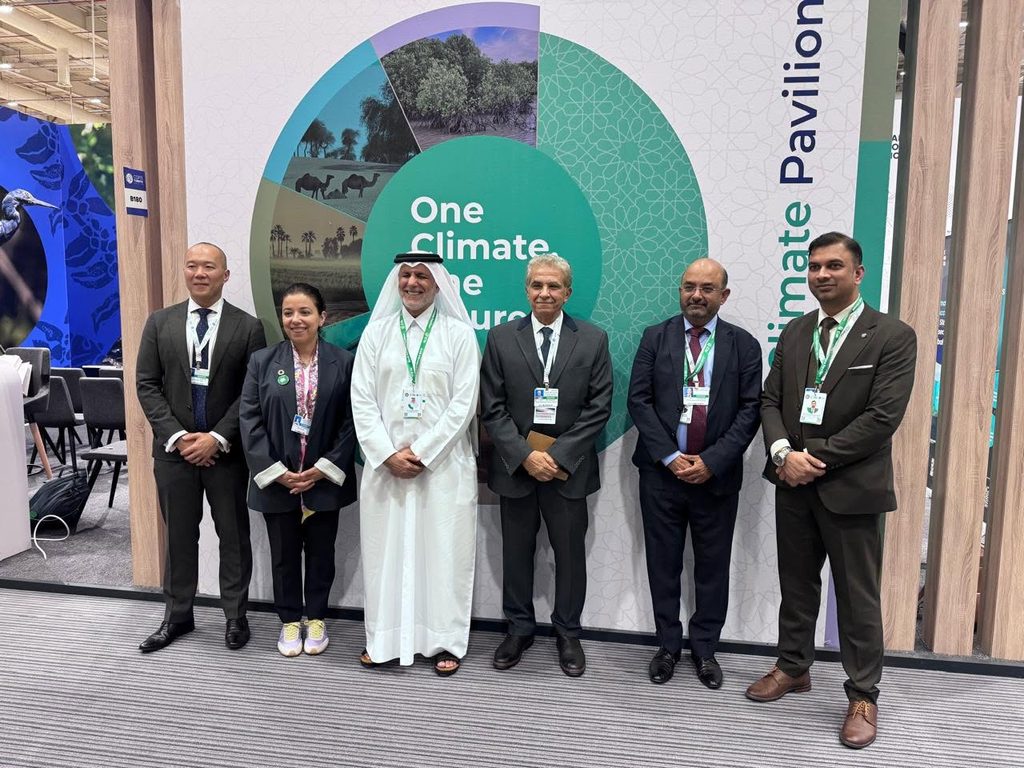
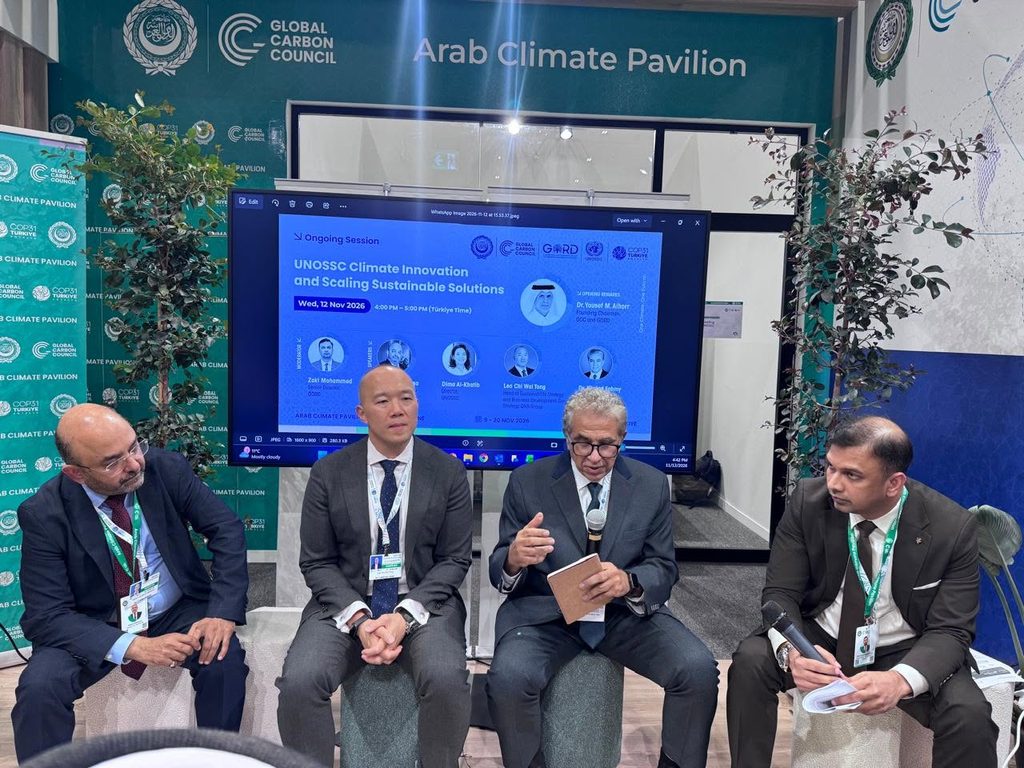
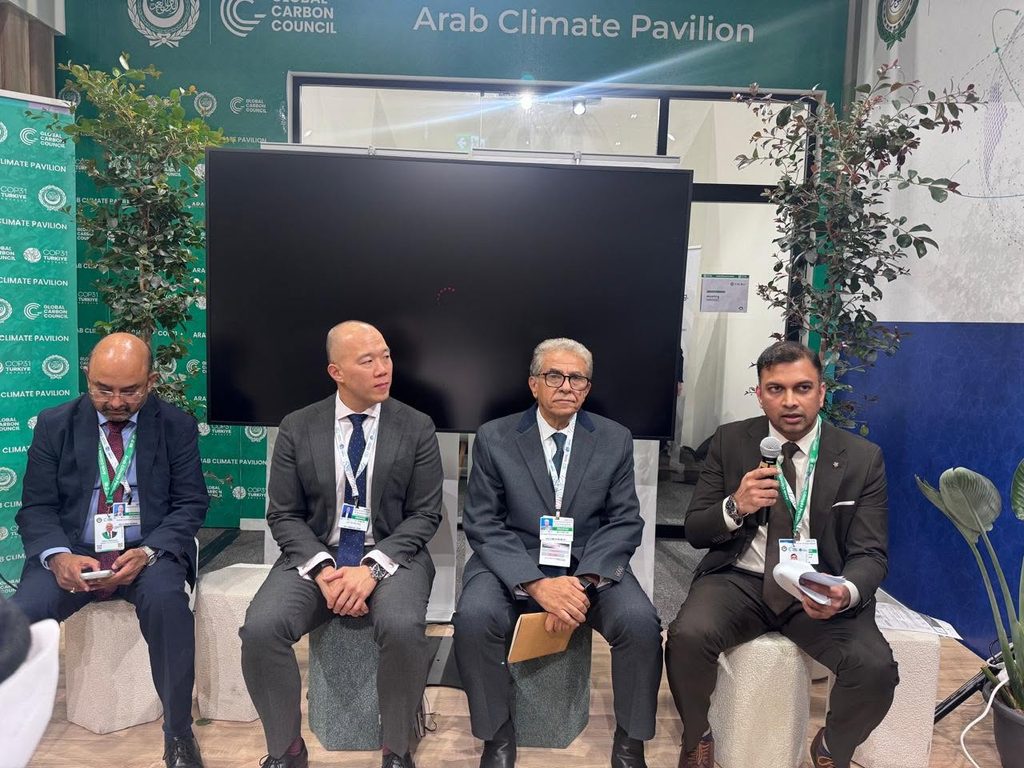
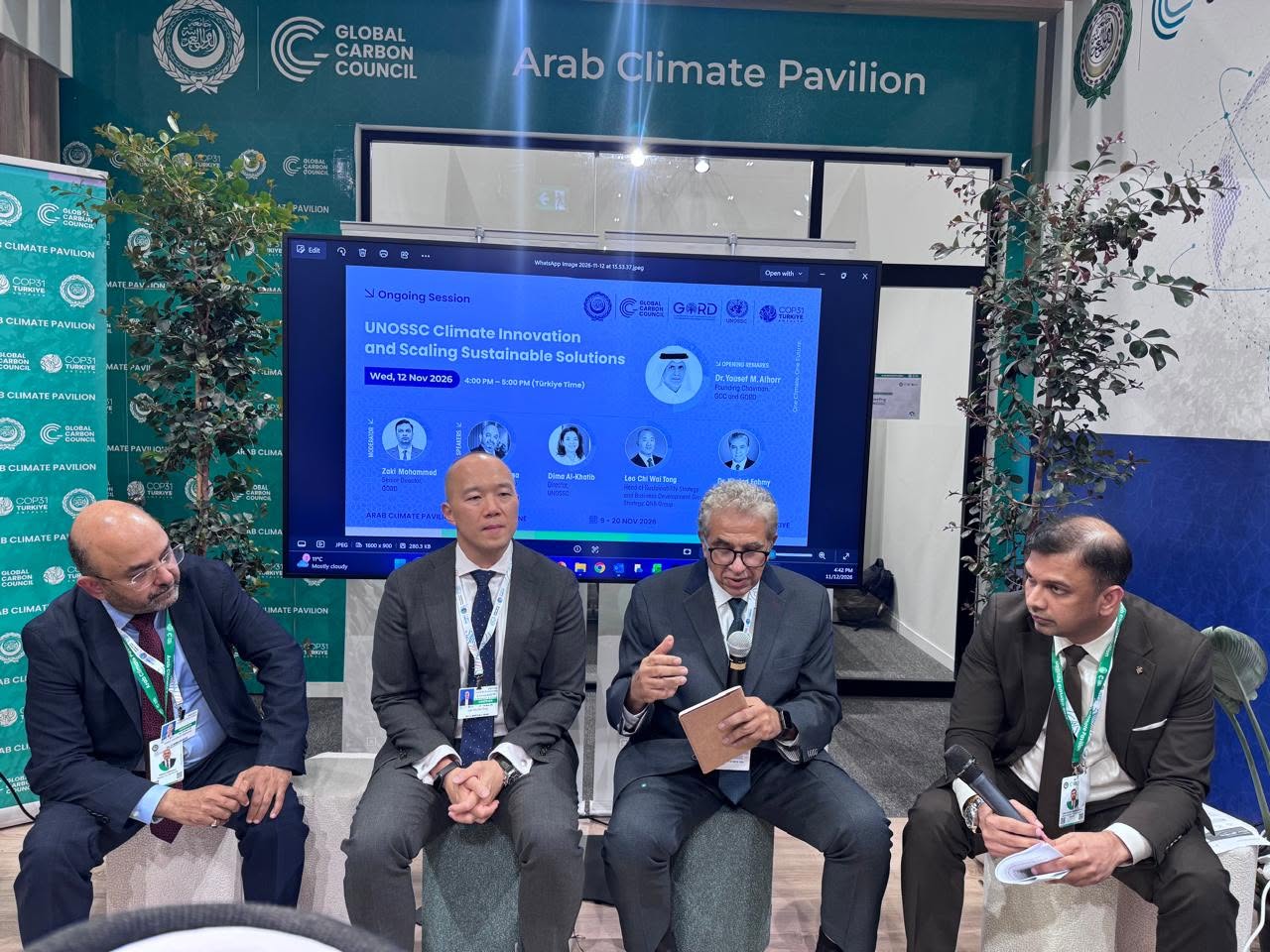
Dr Khaled Fahmy, Executive Director of the Centre for Environment and Development for the Arab Region and Europe (CEDARE) and former Minister of Environment of Egypt, participated in a high-level panel discussion entitled “Climate Solutions from the Global South: From Local Innovation to Replication, Financing, and Scaling Up”, held as part of the 31st Conference of the Parties to the United Nations Framework Convention on Climate Change (COP31) in Antalya, Türkiye.
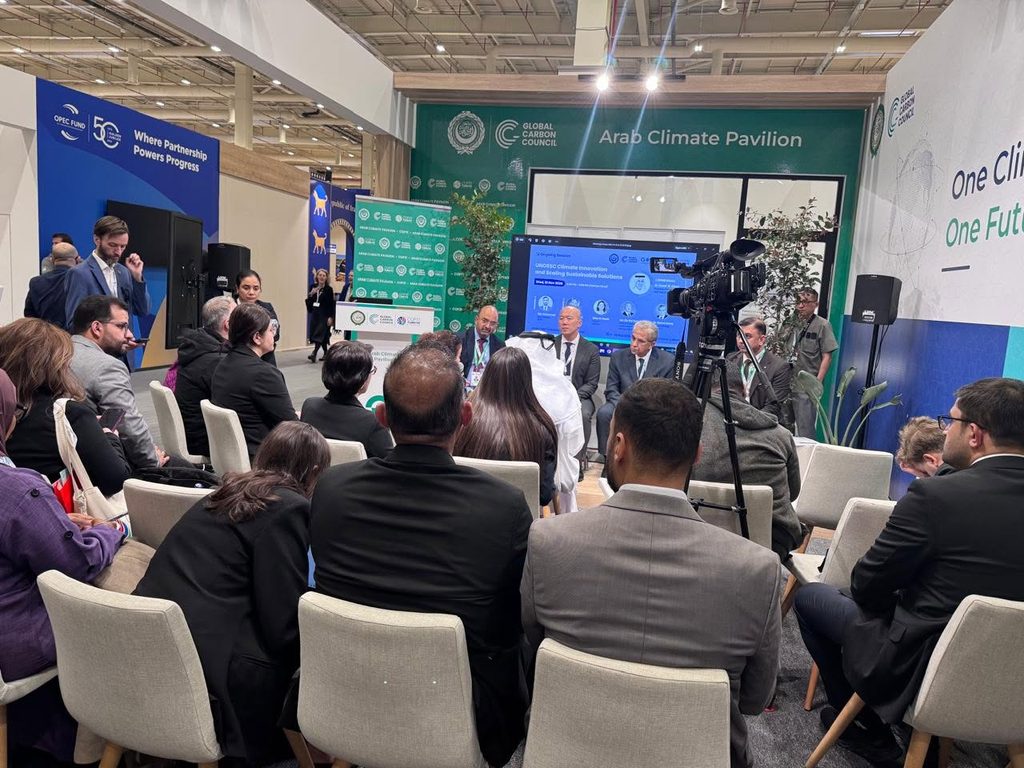
The session took place at the Arab Climate Pavilion and was jointly organised by the United Nations Office for South-South Cooperation (UNOSSC), the Gulf Organisation for Research & Development(GORD), and the Global Carbon Council.
The session brought together representatives of international and regional organisations, alongside experts, to explore ways of advancing climate solutions from local innovation and implementation to replication in other countries and wider deployment, thereby maximising their impact. Discussions focused on financing mechanisms, capacity building and strengthening South-South cooperation.
During his intervention, Dr Fahmy emphasised that scaling up climate solutions across borders requires more than technology transfer or the replication of successful projects. It also requires the transfer and adaptation of the enabling conditions and factors that ensure their success, sustainability, bankability and practical implementation, while taking into account the diverse national contexts and specific local needs of each country.
He outlined five essential elements for the successful transfer and replication of climate solutions: supportive policies and institutional frameworks; adaptation to local conditions and needs; access to innovative financing mechanisms; the availability of technical standards and implementation capacities; and stronger South-South and triangular cooperation.
Dr Fahmy further highlighted the importance of moving away from isolated, standalone projects towards joint, multi-country regional programmes that integrate technical assistance, capacity building, harmonised methodologies and sustainable financing mechanisms. Such an approach would help reduce project development costs, attract greater investment and create viable opportunities to replicate and scale up successful climate solutions.
He also stressed that efforts to make climate solutions bankable and attractive to investors must begin at the earliest stages of their development. This would facilitate the transformation of innovative ideas and successful pilot initiatives into implementable and scalable projects by connecting innovators with government authorities, research institutions, the private sector and financial institutions.
Concluding his intervention, Dr Fahmy emphasised that domestic adoption, institutional readiness and access to finance are essential pillars for scaling up climate solutions. He underscored the pivotal role of South-South cooperation in bringing these elements together and transforming successful local innovations into regional and international initiatives with lasting impact.
CEDARE’s participation reflects its ongoing commitment to strengthening regional and international cooperation, supporting the development of environmental and climate-related solutions and innovations, and facilitating the institutional, technical and financial pathways required to transform these solutions into viable and scalable projects across the Arab region.